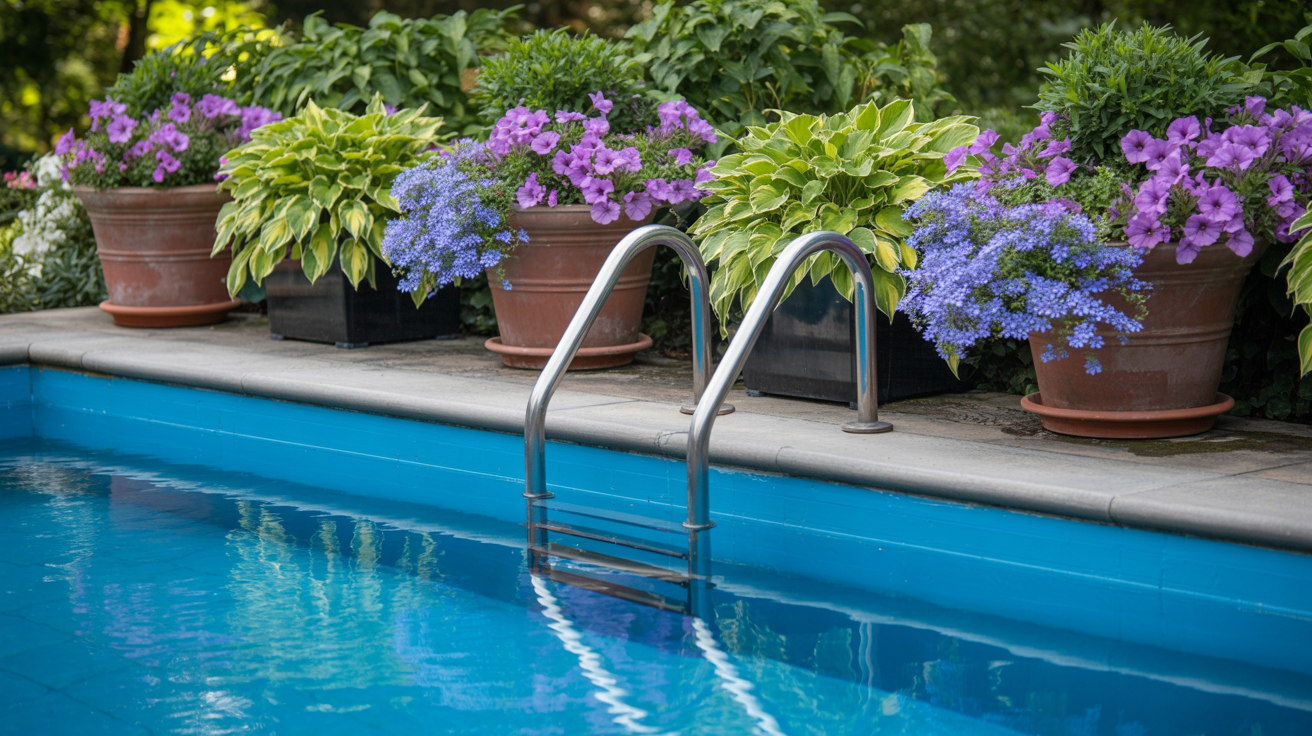
The pool you imagined vs. the pool you live with
Most homeowners picture a pool as a place to relax at the end of a long day, not another weekend chore. Yet many people discover too late that their pool demands constant skimming, scrubbing, and monitoring. That frustration explains why low-maintenance pool design has become such a priority for busy families, professionals, and anyone who values free time as much as style. With the right design choices from the start, a pool can stay clean, attractive, and ready to use without consuming your schedule.
This article speaks to homeowners who want the enjoyment of a pool without the upkeep spiral. You will learn how thoughtful planning, smart materials, and modern technology reduce daily work while keeping your backyard polished and welcoming.
What “low-maintenance” really means in real homes
Low maintenance does not mean zero maintenance. Every pool needs some care, but smart design minimizes how often you intervene and how much effort each task requires. In real homes, low-maintenance pools share a few traits: stable water chemistry, surfaces that resist staining, and systems that work quietly in the background.
Many homeowners assume maintenance problems come from neglect, but design plays a bigger role than most people realize. Shape, finish, equipment placement, and even landscaping choices influence how much debris enters the water and how easy it feels to manage. When you plan for maintenance at the design stage, the pool supports your lifestyle instead of fighting it.
Start with a shape that simplifies cleaning
Pool shape affects more than appearance. It directly impacts how dirt moves and where it settles.
Simple geometry saves time
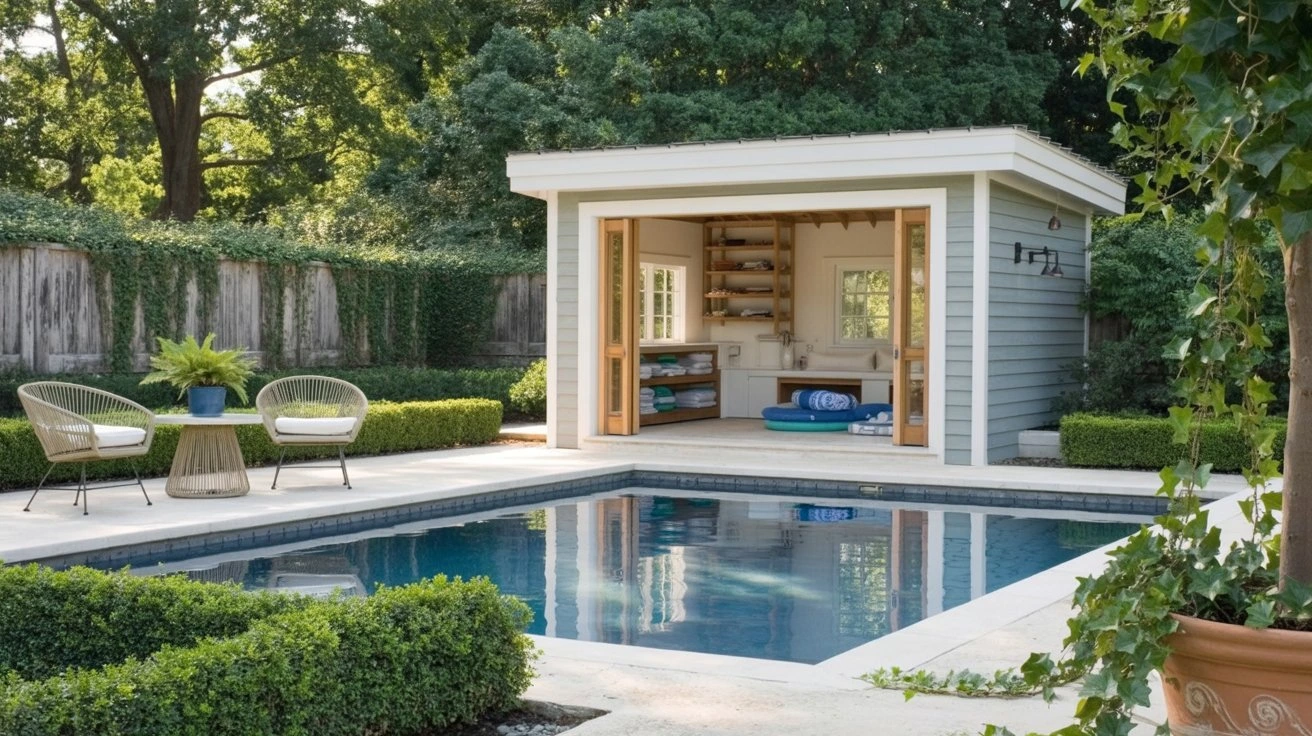
Rectangular and gently curved pools allow water to circulate evenly. Debris travels predictably toward drains and skimmers, which helps automatic cleaners work efficiently. In contrast, sharp corners, tight coves, and decorative ledges trap leaves and algae.

If you love visual interest, consider subtle curves or a shallow tanning shelf with smooth edges rather than multiple alcoves. This approach preserves style while reducing problem areas.
Fewer features, fewer headaches
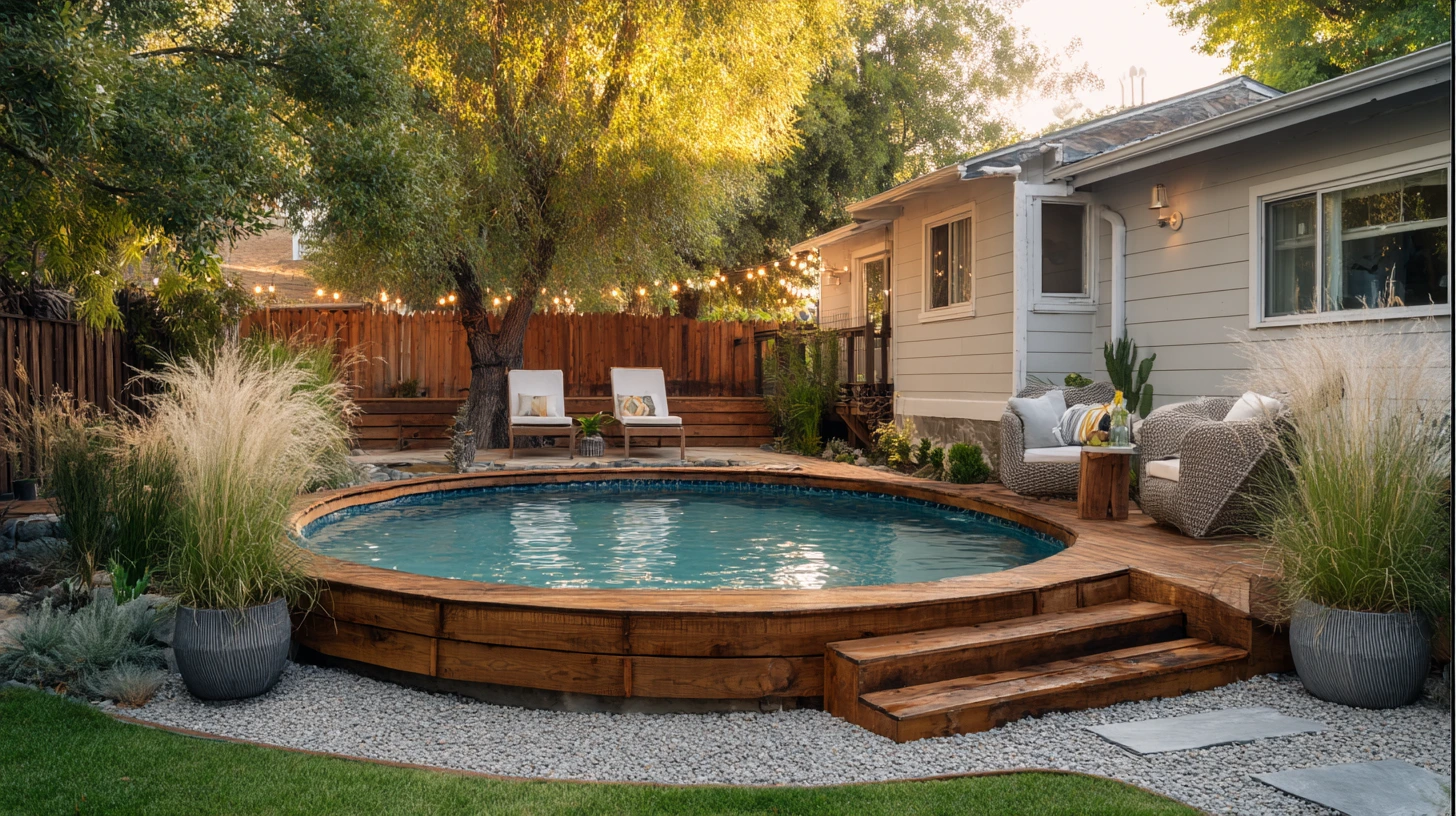
Waterfalls, rock grottos, and ornate steps look dramatic, but they also collect debris and disrupt circulation. Each feature adds a surface that needs brushing. Busy homeowners often feel happier with clean lines and a calm water surface that stays balanced with less effort.
Pool finishes that resist stains and wear
Your pool finish determines how often you brush, how easily algae clings, and how long the surface lasts. Choosing the right material creates one of the biggest maintenance reductions over time.
Plaster vs. aggregate vs. tile
Traditional plaster costs less upfront, but it stains easily and requires frequent brushing. Many homeowners notice discoloration within a few seasons, especially in sunny climates.

Aggregate finishes, such as quartz or pebble blends, resist staining and algae far better. These surfaces feel durable and forgiving if chemistry drifts slightly. Tile offers the longest lifespan and the highest resistance to chemicals, but it comes with a higher installation cost.
Quick comparison of common pool finishes
| Finish Type | Maintenance Level | Durability | Cost Range |
|---|---|---|---|
| Plaster | High | Moderate | Low |
| Quartz aggregate | Low | High | Medium |
| Pebble aggregate | Low | Very High | Medium–High |
| Tile | Very Low | Excellent | High |
Most homeowners who prioritize easy-care pools choose aggregate finishes because they balance cost, longevity, and reduced cleaning.
Automated pool features that work while you live
Automation transforms how a pool fits into daily life. Instead of constant manual checks, systems handle routine tasks quietly and consistently.
Robotic cleaners that actually replace manual labor
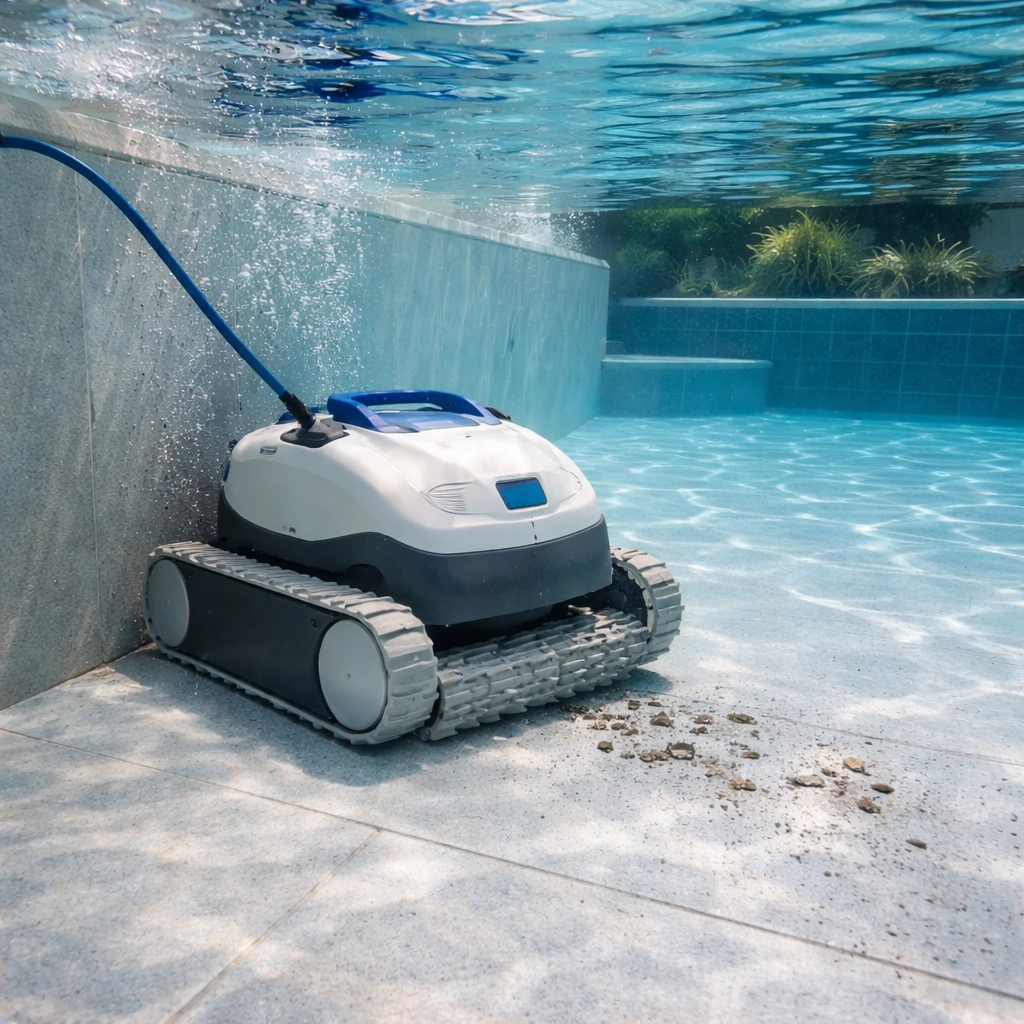
Modern robotic cleaners scrub walls, steps, and floors without supervision. They collect debris in self-contained filters, which means your main filtration system stays cleaner. Many homeowners report that once they add a quality robotic cleaner, they stop brushing entirely.
Automated chemical control for stable water
Automated pool features now monitor and adjust chemical levels in real time. These systems add sanitizer as needed, which prevents algae blooms and reduces testing frequency. While automation adds upfront cost, it saves time and prevents expensive water problems later.
Smart controls you check once a day
Smart pool controllers allow you to manage pumps, heaters, and lights from your phone. Instead of walking outside to check settings, you glance at an app. This convenience reduces small errors that lead to maintenance issues.
Filtration systems that do the heavy lifting
A pool stays clean because its filtration system works properly. When filtration fails, maintenance multiplies.
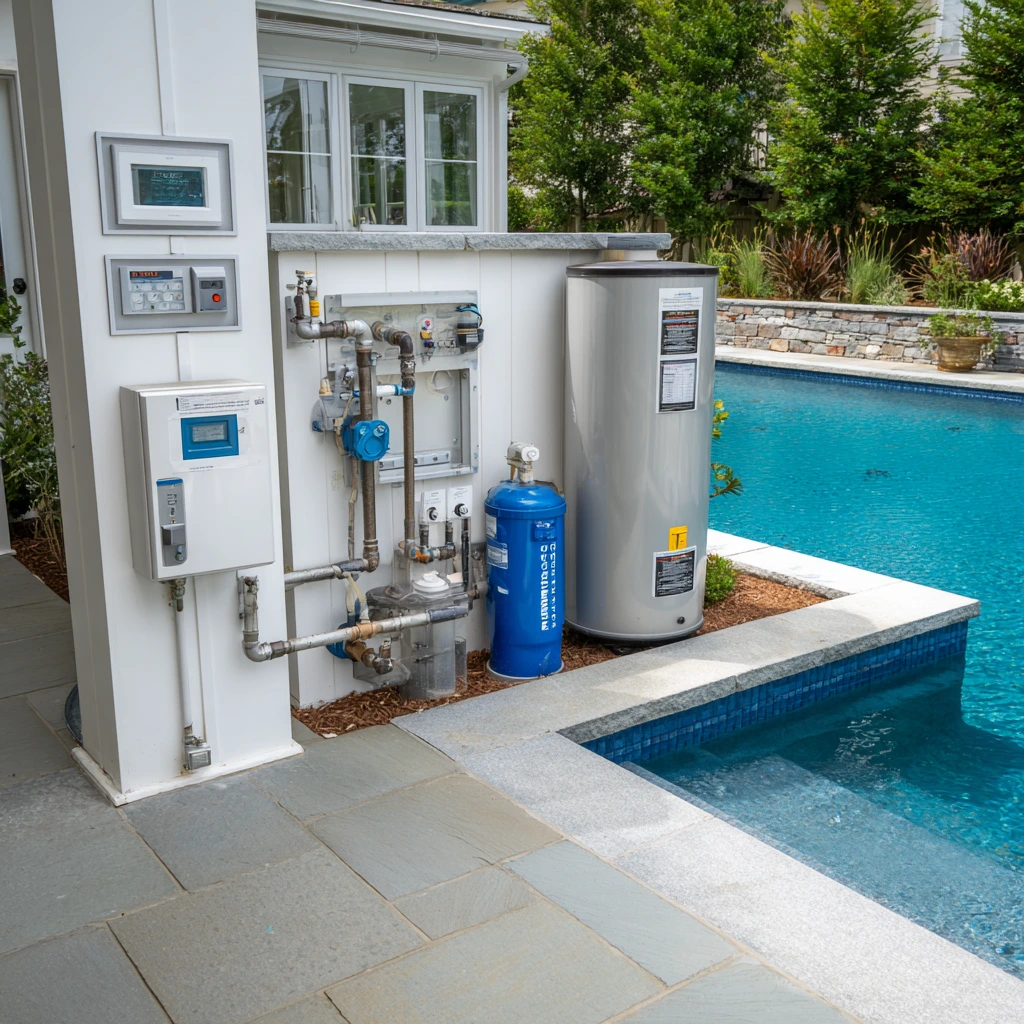
Cartridge filters for simpler upkeep
Cartridge filters require less backwashing than sand or DE filters. You remove and rinse them a few times per season rather than dealing with frequent cleanouts. Many homeowners appreciate how predictable and mess-free this process feels.
Variable-speed pumps that stay efficient
Variable-speed pumps run longer at lower speeds, which improves filtration while using less energy. These pumps move debris slowly toward filters instead of blasting it around. Better circulation means fewer cloudy water episodes and less chemical correction.
Why filtration choices matter Poor filtration forces you to compensate with chemicals and manual cleaning. Strong, steady filtration reduces the workload across every other maintenance task.
Decking and coping that stay clean longer
The pool itself does not cause all maintenance issues. Surrounding surfaces often create the mess.
Choose materials that shed dirt
Porcelain pavers, brushed concrete, and sealed stone resist staining and clean easily. Rough stone and untreated concrete trap dirt that washes into the pool during rain or foot traffic.
Light colors reveal problems early
Light decking shows dirt before it becomes a major issue. Dark surfaces hide buildup until it reaches the water. Early visibility allows quick rinsing instead of deep cleaning sessions.
Landscaping choices that reduce debris
Landscaping can either protect your pool or constantly work against it.
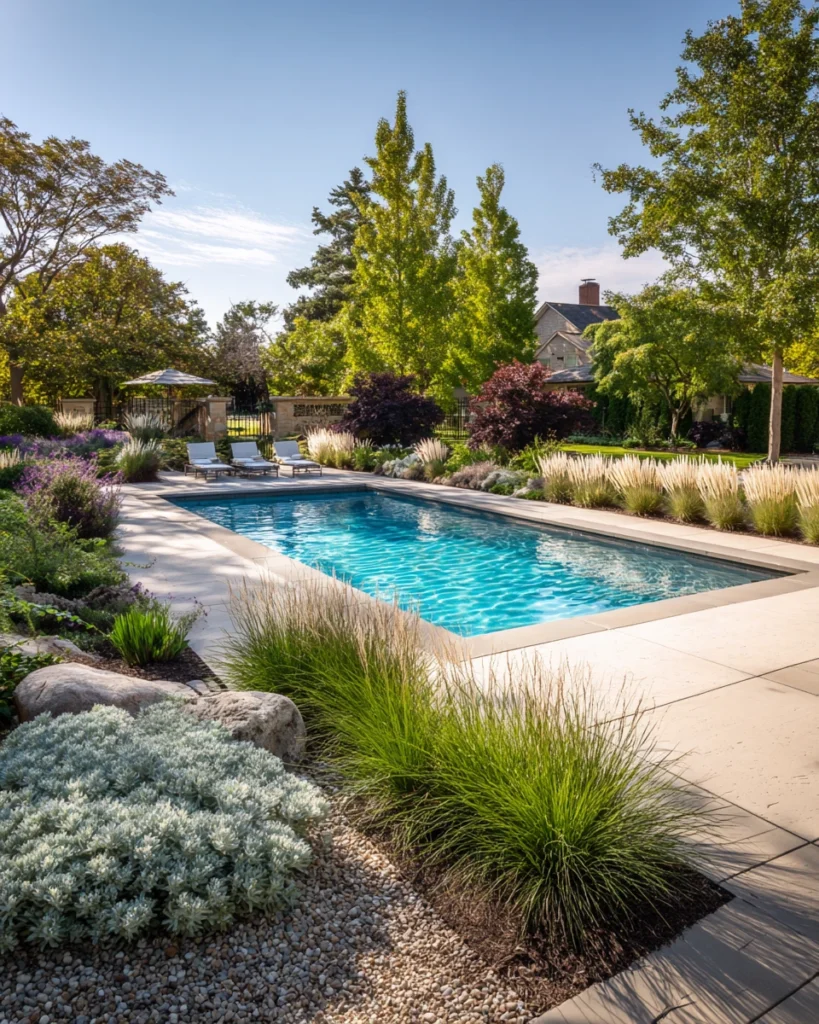
Plant placement matters more than variety
Trees placed too close to the pool shed leaves, pollen, and seeds directly into the water. Even “low-mess” plants create ongoing debris if they overhang the pool. Strategic spacing reduces daily skimming.
Favor slow-growing, evergreen plants
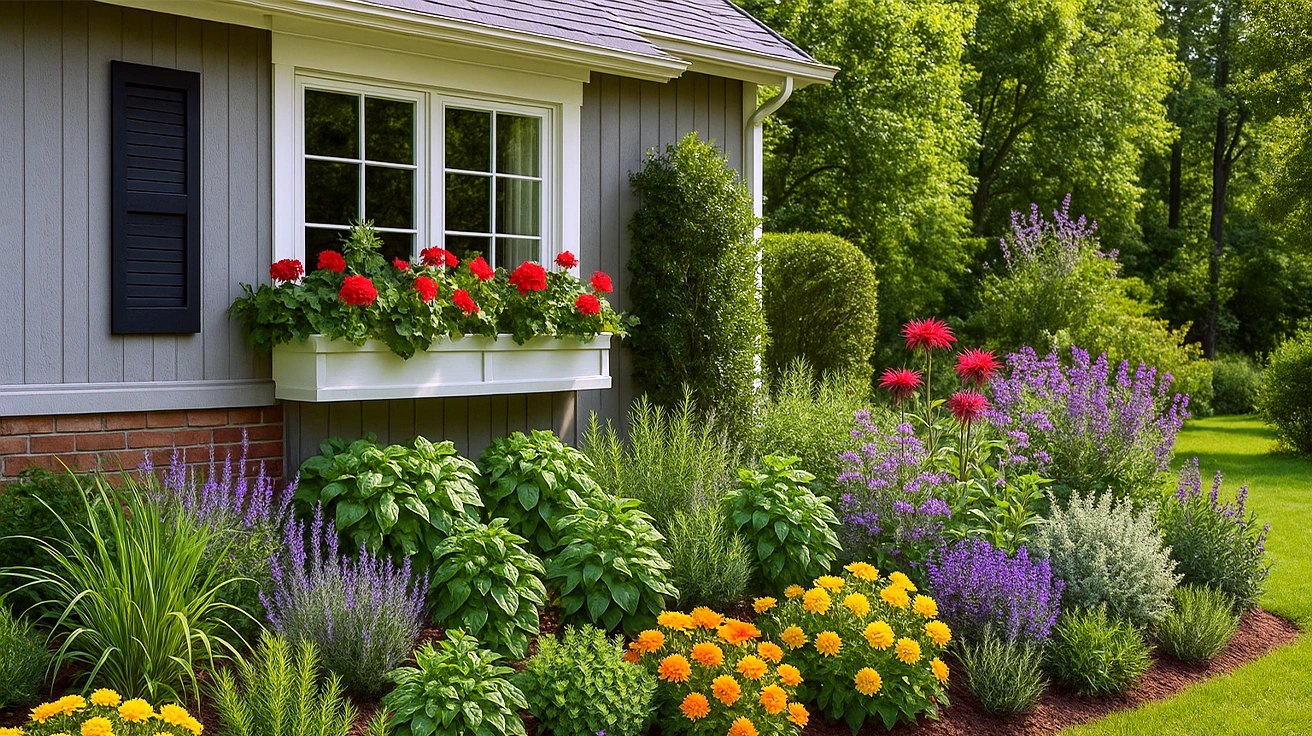
Evergreen shrubs with minimal shedding keep the yard green without seasonal cleanup spikes. Ornamental grasses and flowering trees look beautiful, but they create more maintenance than many homeowners expect.
Practical landscaping tips
- Keep trees at least 10 feet from the water’s edge
- Use gravel or mulch beds to trap debris before it reaches the pool
- Avoid plants that drop berries, needles, or sticky sap
Pool covers that protect water quality
A cover serves as a quiet maintenance assistant, especially during off-hours.
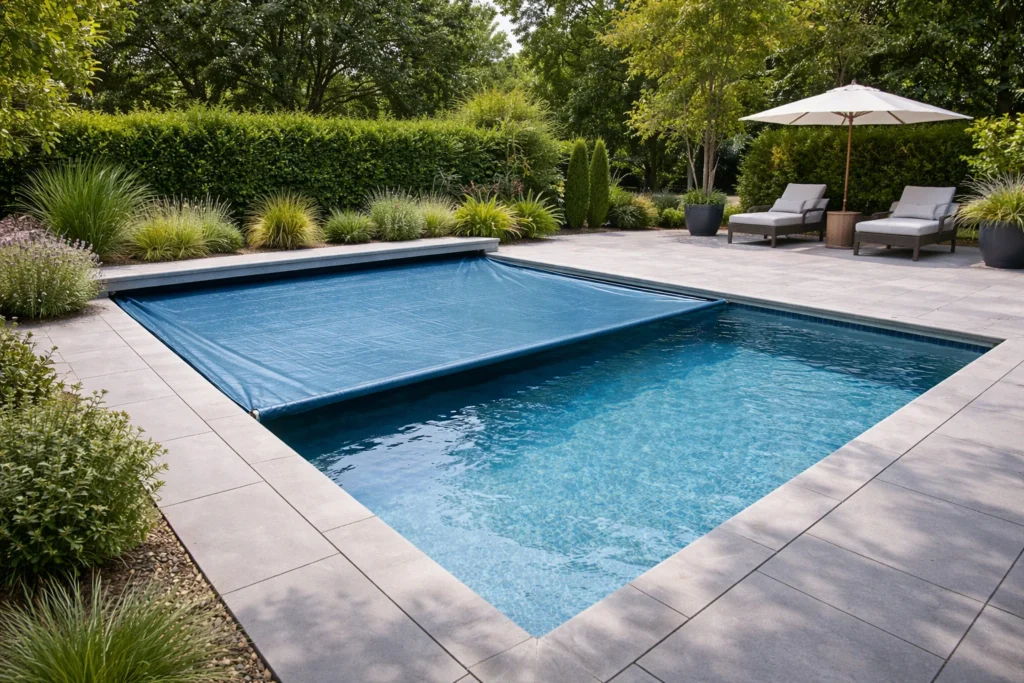
Automatic covers for daily protection
Automatic covers prevent debris from entering the water when the pool sits unused. They also reduce evaporation, which stabilizes chemical levels. Many homeowners notice clearer water after installing a cover because fewer contaminants enter the pool.
Manual covers for seasonal simplicity
If automatic systems exceed your budget, a high-quality manual cover still provides strong protection during vacations or off-season periods. The key lies in consistent use.
Budget-smart decisions that pay off over time
Low-maintenance design does not require the most expensive option in every category. Smart prioritization creates the biggest impact.
Spend where maintenance costs compound
Automation, filtration, and finishes influence maintenance every day. Spending more here reduces recurring labor and chemical costs.
Save where effort stays minimal
Simple shapes, restrained features, and clean landscaping reduce labor without heavy spending. These choices rely on planning rather than upgrades.
A realistic trade-off to consider Some low-maintenance features increase upfront cost but lower long-term stress. Busy homeowners often find that time savings justify the investment.
Common low-maintenance pool myths
Even well-designed pools carry misconceptions.
- “Saltwater pools require no care.” Saltwater systems still need monitoring and cleaning. They simplify sanitation but do not eliminate maintenance.
- “Natural pools maintain themselves.” Natural pools require plant management and water balance attention. They reduce chemicals but increase biological care.
- “Smaller pools always mean less work.” Poor circulation in small pools can increase problems. Design quality matters more than size.
Understanding these realities helps homeowners avoid disappointment and plan accurately.
Who benefits most from low-maintenance pool design
This approach suits homeowners who travel frequently, manage busy households, or prefer spending time relaxing rather than cleaning. It also works well for people who hire occasional professional service but want fewer emergency visits.
Low-maintenance pools support lifestyle consistency. You enjoy the water when you want it, not only after hours of preparation.
Bringing it all together before you build
Low-maintenance pool design works best when you address it early. Retrofitting solutions later costs more and solves fewer problems. When you approach the project with maintenance in mind, every decision supports ease of use.
Ask yourself how often you want to interact with your pool beyond swimming. Let that answer guide shape, materials, equipment, and landscaping choices.
Final thoughts: a pool that respects your time
A well-designed pool should feel like a retreat, not a responsibility. With thoughtful planning, durable finishes, and automated pool features, you can create an easy-care pool that stays clean without constant attention. Low-maintenance pool design allows busy homeowners to enjoy the water on their own terms.
As you plan or renovate, consider how each design choice affects daily life. A few smart decisions now can protect your time for years to come.