Under Stairs Ideas: Creative Ways to Use Every Inch of Space

Most homes have at least one awkward spot that never quite earns its keep. The space under the stairs often tops that list. It collects shoes you meant to organize, boxes you plan to sort later, or nothing at all. That unused area may seem tricky, but it holds real potential. With the right under stairs ideas, you can turn wasted square footage into something practical, attractive, and tailored to how you live.
In real homes, space works hard. Storage matters. Clear walkways matter. So does making a house feel finished rather than improvised. The ideas below focus on solutions that balance function and style without assuming unlimited budgets or perfect floor plans. Each option helps you rethink what the space under your stairs can do for you.
1. Built-In Storage Cabinets That Disappear Into the Wall
Custom cabinets remain one of the most reliable ways to use space under stairs. They follow the slope of the staircase and create storage that feels intentional rather than added on. When doors align with nearby trim or wall panels, the whole setup blends in quietly.
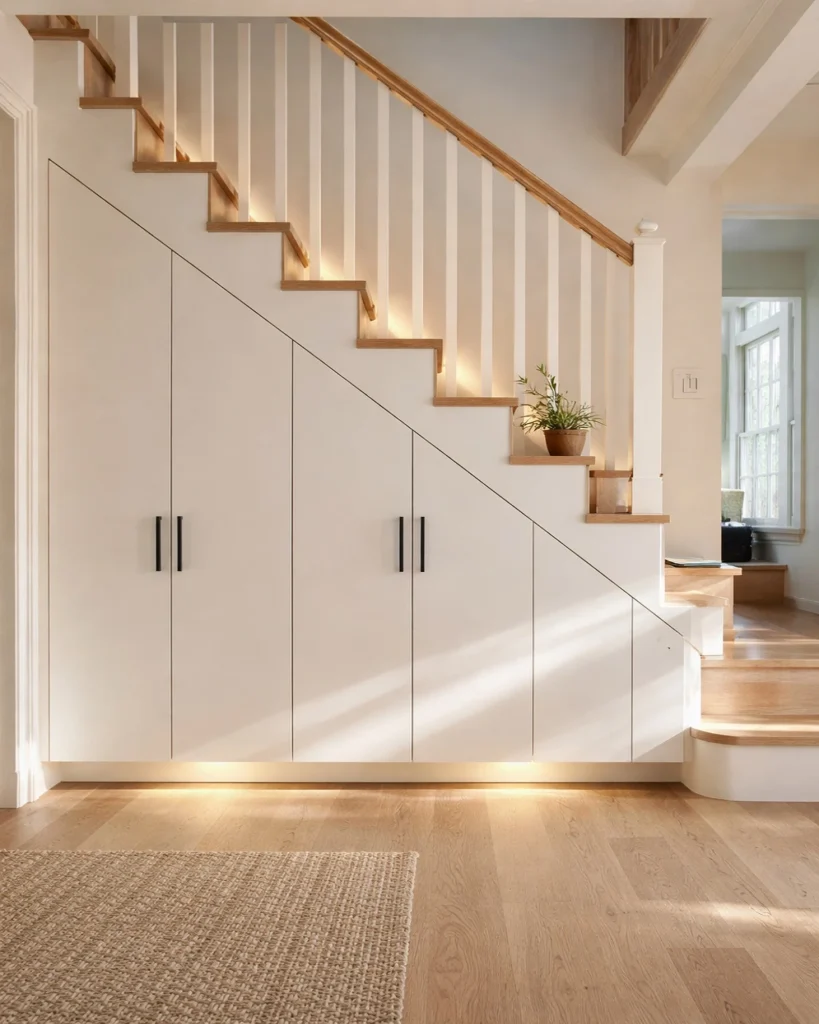
This approach works well in entryways and hallways where clutter builds fast. Shoes, bags, cleaning supplies, and seasonal items all stay hidden but accessible. Many homeowners prefer push-latch doors or simple pulls to keep the look clean.
Practical tip: Use adjustable shelving inside the cabinets. Needs change over time, and fixed shelves limit flexibility.
2. Pull-Out Drawers for Shoes, Pantry Items, or Tools
Deep pull-out drawers make excellent use of shallow under-stair space. Unlike cabinets, they let you see everything at once, which reduces forgotten items at the back. This setup works especially well for shoes, pet supplies, or kitchen overflow.
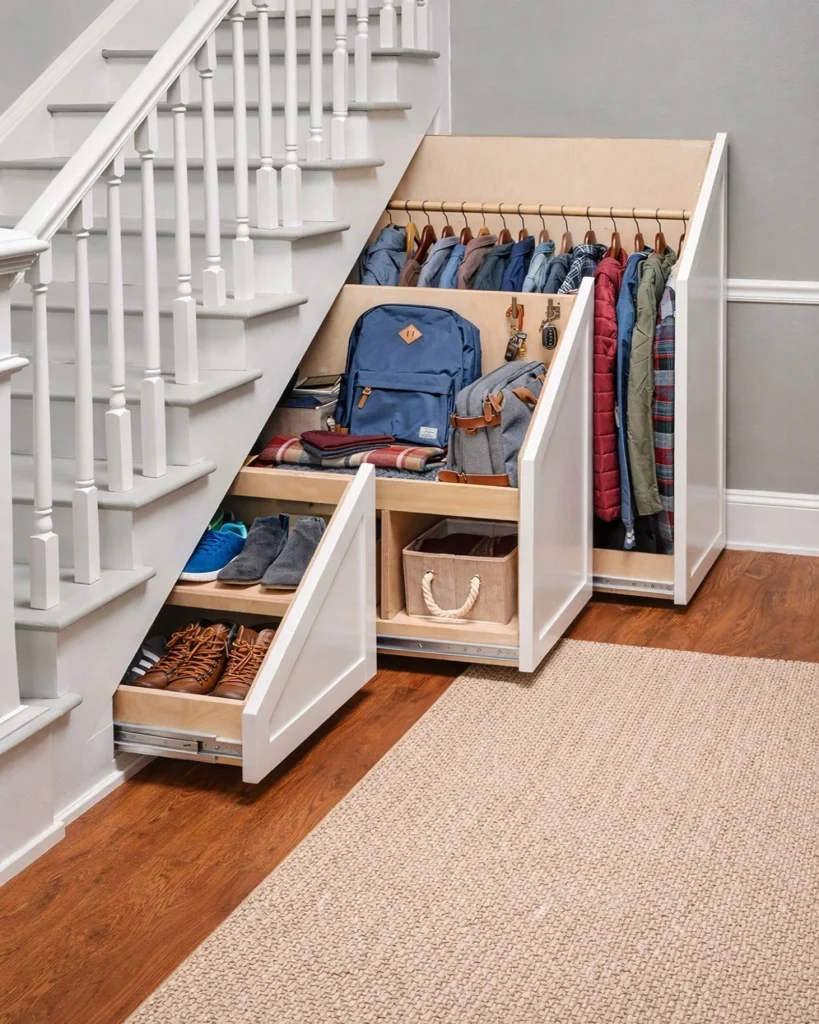
In homes without a pantry, under-stair drawers often store dry goods and small appliances. In family homes, they handle sports gear and backpacks without spilling into living areas.
Pros: Easy access, strong organization
Cons: Higher build cost than open shelving
3. Open Shelving for Books, Décor, or Everyday Storage
Open shelving suits homeowners who want function with a lighter visual feel. It keeps the space under stairs from looking boxed in, especially in smaller homes. Shelves work well for books, baskets, plants, and framed photos.
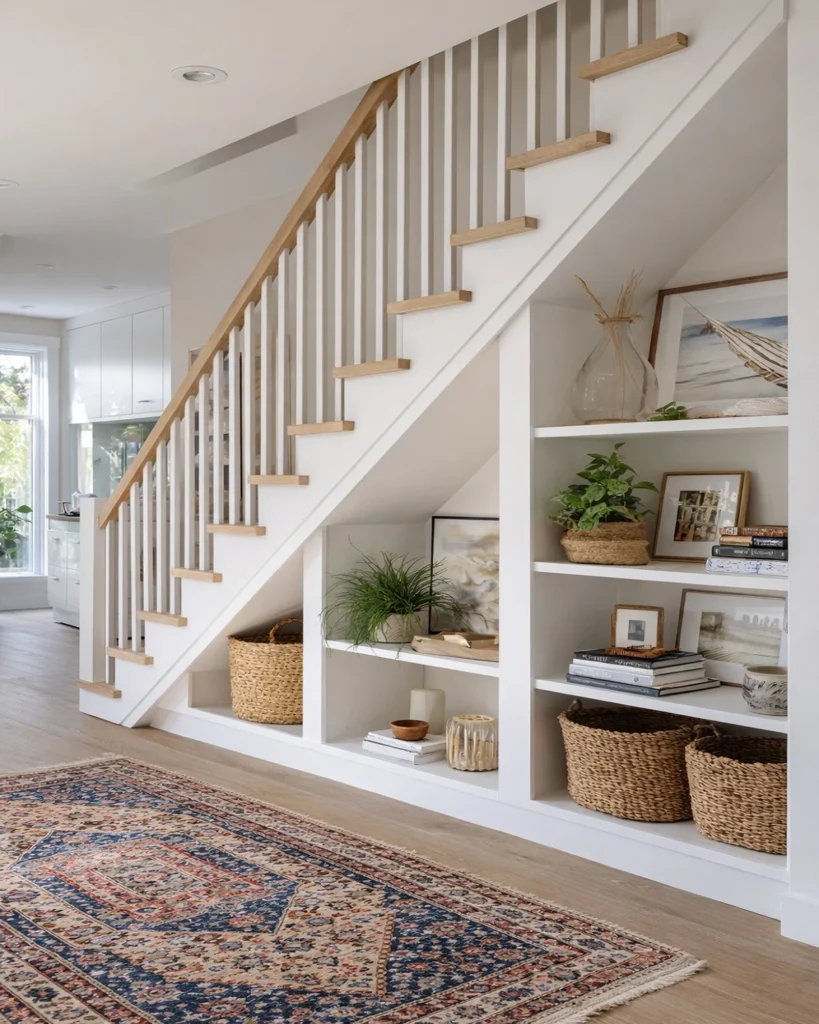
This option requires discipline. Items stay visible, so clutter shows quickly. Many people mix closed storage on the lower shelves with open ones above to strike a balance.
Best for: Living rooms, home offices, or open-plan spaces
4. A Compact Home Office That Actually Gets Used
Under stairs offices succeed when they stay simple. A narrow desk, wall-mounted shelves, and proper lighting create a workspace without claiming a full room. This idea works well for bill-paying, remote check-ins, or homework supervision.
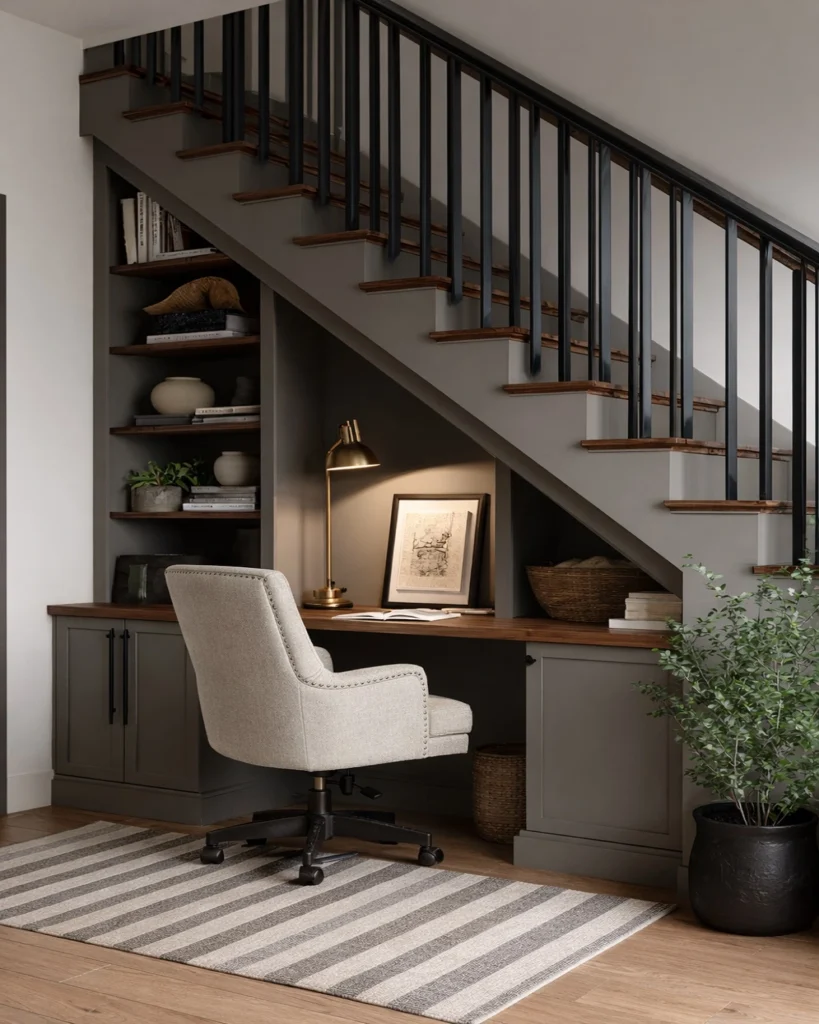
Good lighting matters more than size here. Task lights or integrated LED strips prevent the space from feeling gloomy. A chair that tucks fully under the desk keeps walkways clear.
Reality check: This setup works best for short tasks, not full-day remote work.
5. A Quiet Reading Nook or Bench Seating Area
Some of the most inviting under stairs ideas focus less on storage and more on comfort. A built-in bench with cushions turns unused space into a spot people actually enjoy. Reading nooks work well in living rooms or near entryways.
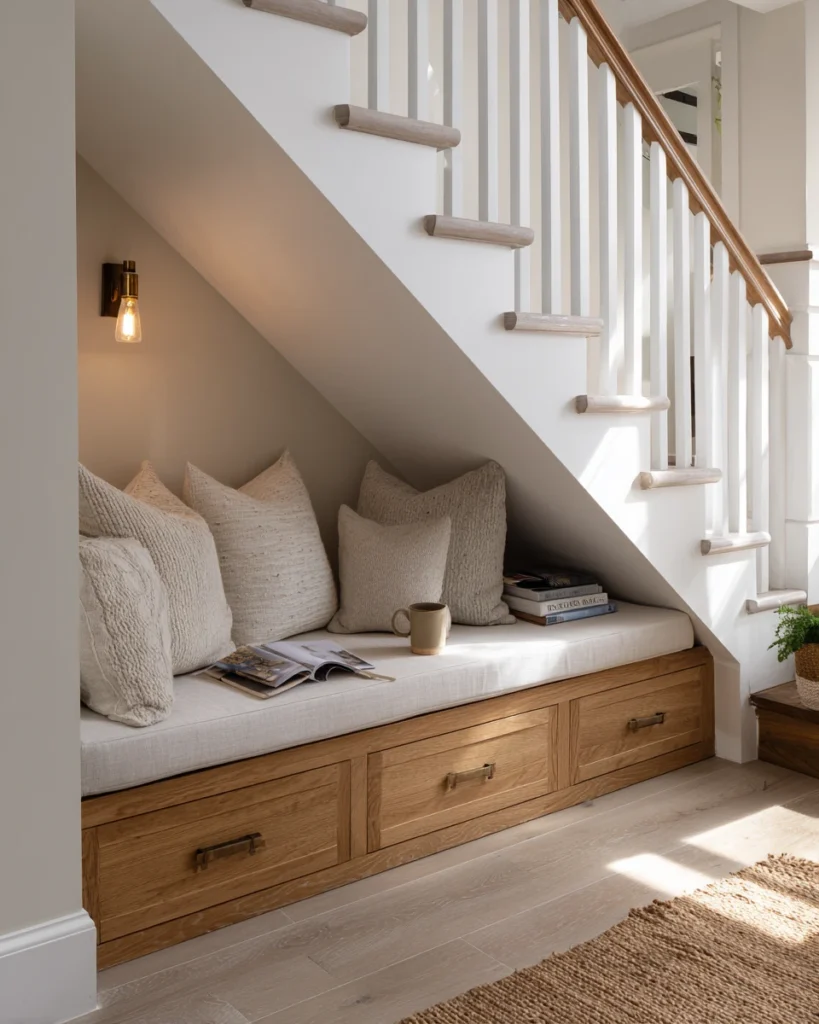
Adding drawers beneath the bench gives you storage without compromising comfort. Soft lighting and a nearby outlet make the nook usable any time of day.
Why it works: It adds function without feeling utilitarian.
6. A Practical Mudroom Zone Near the Entry
When stairs sit near the front door, the space underneath can anchor a small mudroom. Hooks, cubbies, and a bench help manage daily comings and goings. This setup reduces clutter before it spreads into the rest of the house.

Families find this especially helpful. Kids learn where bags and shoes belong, which cuts down on last-minute searches.
Design note: Durable finishes matter here. Choose materials that handle scuffs and moisture.
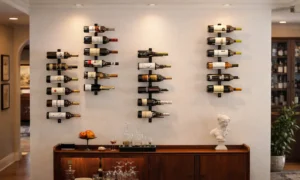
7. Wine Storage or a Beverage Station for Entertaining Homes
Under stairs cupboards often become wine storage in homes that entertain regularly. The angled ceiling suits bottle racks, and the enclosed space maintains consistent temperature better than open areas.
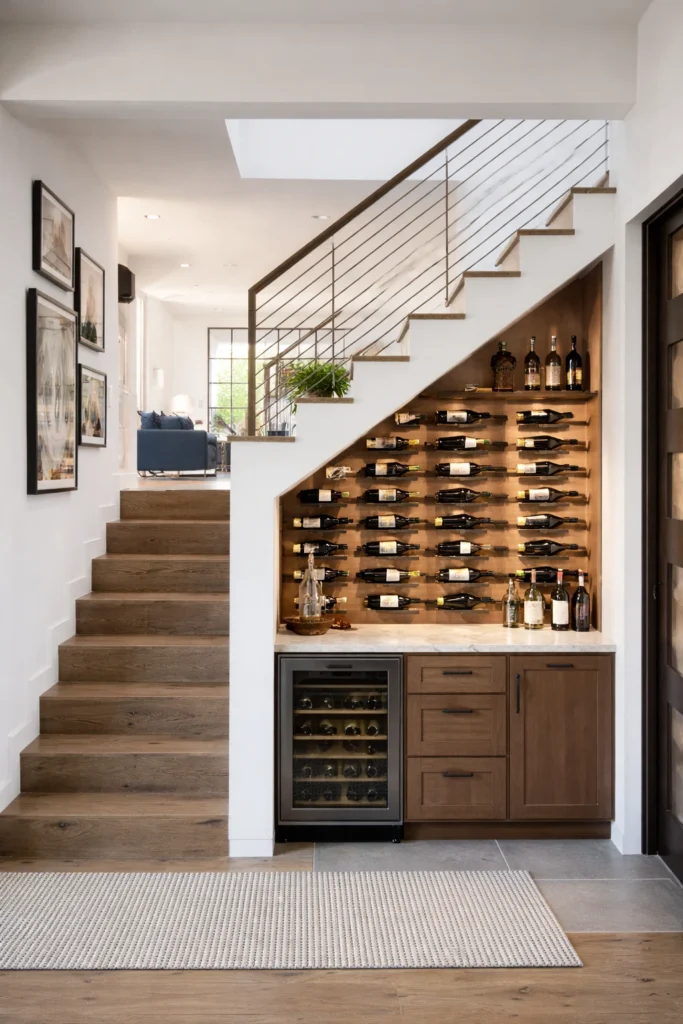
Some homeowners add a small counter and glass storage to create a compact beverage station. This works well near dining rooms or living spaces.
Limitation: Avoid this idea near heat sources or direct sunlight.
8. A Hidden Powder Room or Half Bath
In larger homes, the space under stairs sometimes fits a compact powder room. This option requires plumbing access and careful planning, but it solves a real need in busy households.
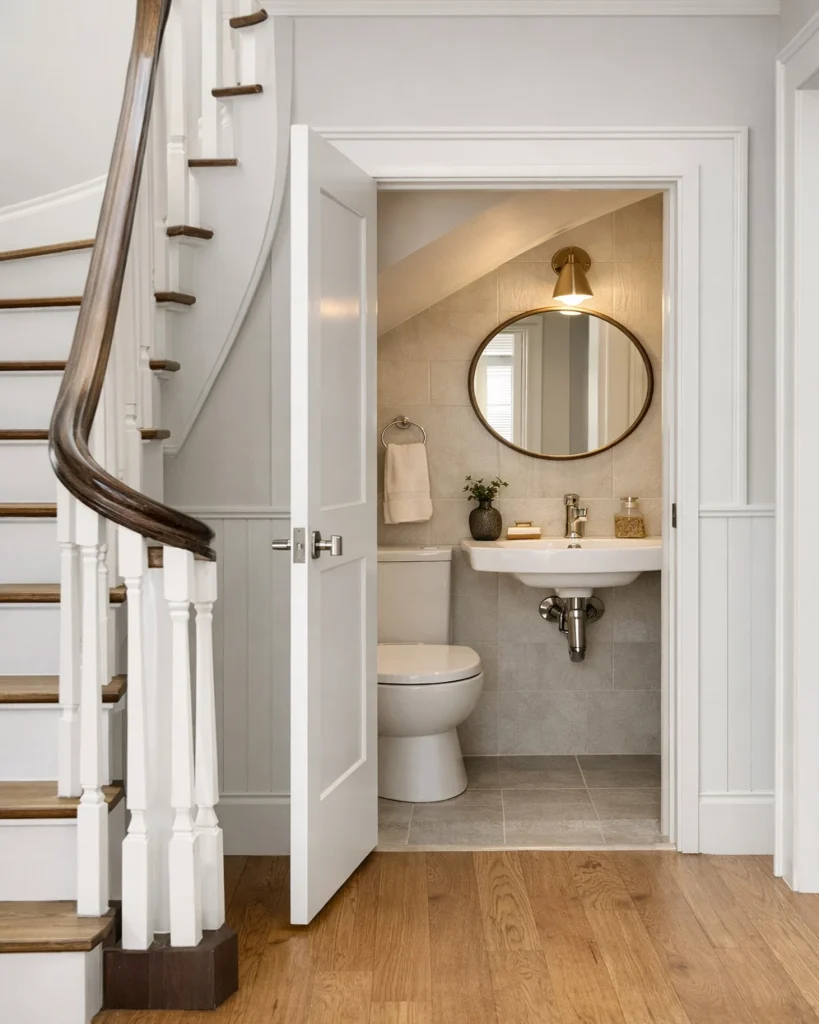
Building codes often dictate minimum clearances and ventilation, so professional input matters here. When done right, guests rarely notice the room’s location.
Best for: Renovation projects rather than quick upgrades
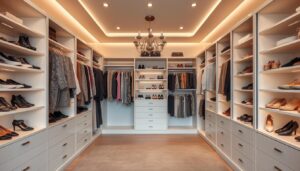
9. Under the Stairs Wardrobe
For homes short on closet space, an under the stairs wardrobe can be a surprisingly effective solution. By using hanging rails, drawers, and open shelving that follow the slope of the staircase, this area can function much like a compact walk-in closet.
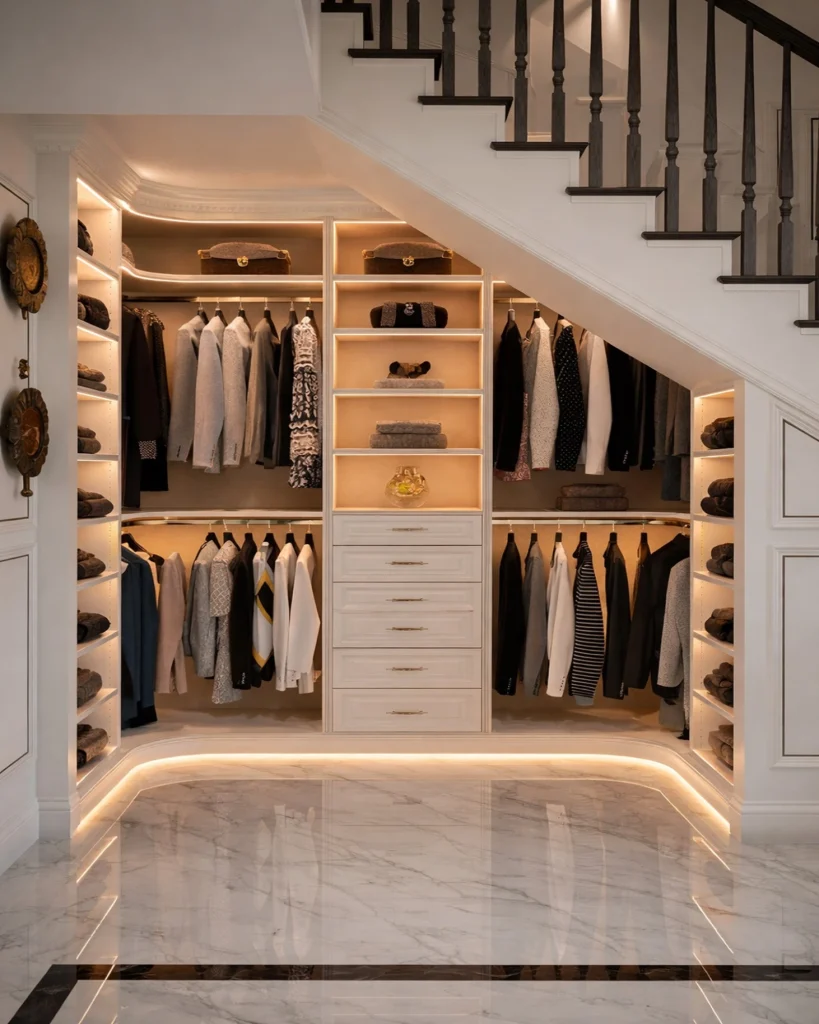
Coats, jackets, and everyday clothing stay organized and easy to reach, while folded items and accessories fit neatly into built-in drawers or cubbies.
Soft integrated lighting makes the space practical to use at any time of day and helps the wardrobe feel intentional rather than tucked away.
This setup works especially well near entryways or bedrooms, where extra hanging space often makes the biggest difference. When designed carefully, an under-stairs wardrobe replaces bulky freestanding furniture and turns an overlooked corner into a highly functional storage zone.
10. A Kid-Friendly Play or Craft Zone
Families with young children often turn under stairs space into a play nook. Low shelves, bins, and a small table create a contained area for toys or crafts. Kids enjoy having a space scaled to them.
As children grow, the same area can transition into storage or a study corner. This adaptability adds long-term value.
Safety note: Avoid sharp corners and ensure proper lighting.
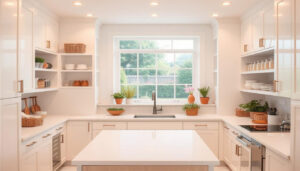
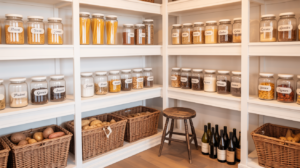
11. An Under the Stairs Pantry for Everyday Kitchen Storage
An under the stairs pantry offers a smart solution for homes that lack dedicated kitchen storage or need extra room for everyday essentials.
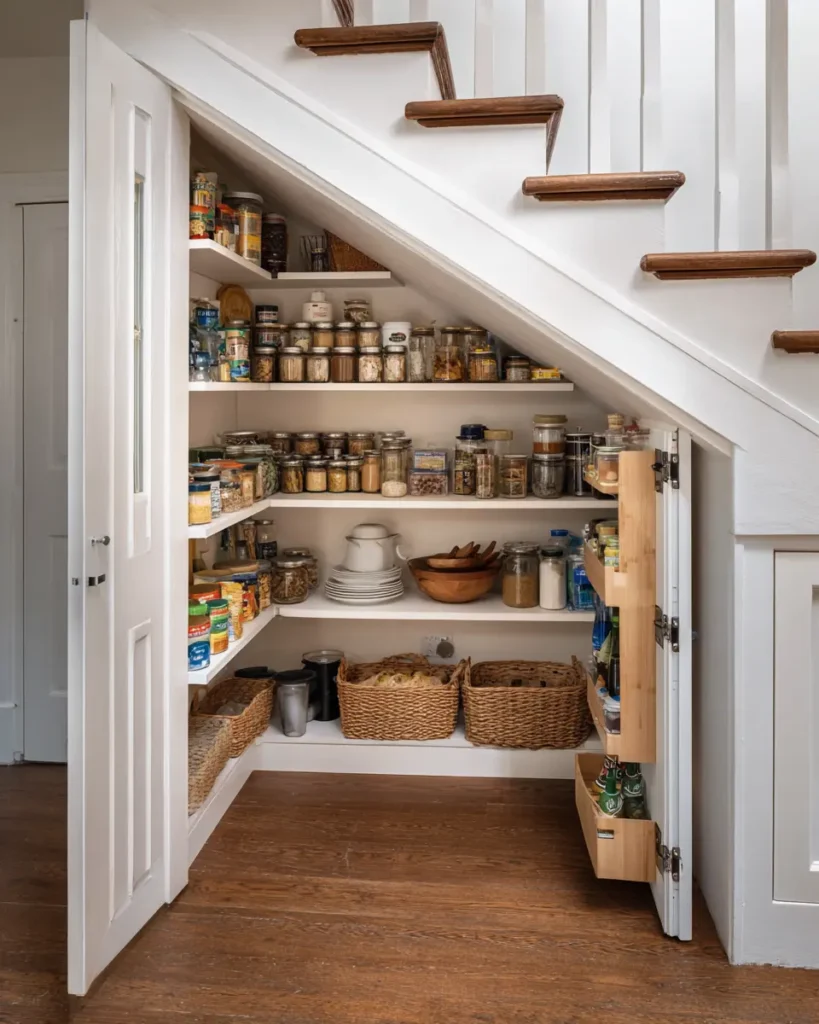
By fitting shelves, pull-out baskets, and narrow cabinets into the sloped space, this area can store dry goods, small appliances, and bulk items without crowding the kitchen itself. Clear containers and labeled baskets make it easy to see what you have and avoid forgotten items.
Good lighting plays an important role here, especially in deeper sections where natural light does not reach.
This type of pantry works best when designed for frequent access, turning unused under-stair space into a practical extension of the kitchen that supports daily routines rather than long-term storage.
12. A Utility Closet for Cleaning and Household Gear
Practical homes often need practical solutions. Turning the space under stairs into a utility closet keeps cleaning tools, vacuums, and supplies out of sight but close at hand.
Wall-mounted organizers and hooks prevent clutter from piling up. This idea suits almost any home and costs less than many custom builds.
Why homeowners choose this: It solves a daily problem without fuss.
Choosing the Right Under Stairs Idea for Your Home
Every staircase comes with different limits. Ceiling height, depth, and nearby rooms all affect what works best. Before committing to a design, consider how often you will use the space and what problem you want it to solve.
A quick comparison helps clarify decisions:
| Need | Best Option |
|---|---|
| Everyday organization | Drawers or cabinets |
| Extra seating | Bench or nook |
| Work surface | Compact desk |
| Long-term storage | Closed cupboards |
| Family traffic control | Mudroom setup |
Start with function. Style can follow.
Final Thoughts: Making the Most of an Overlooked Space
The space under your stairs does not need to stay forgotten. With thoughtful planning, it can support daily routines, reduce clutter, and add character to your home. The best under stairs ideas respect how people actually live, not how spaces look in perfect photos.
Take a close look at your staircase and consider what feels missing elsewhere in your home. Whether you need storage, seating, or a quiet corner, that unused space may already hold the solution. Thoughtful use of every inch builds homes that feel calmer, smarter, and easier to live in.