I remember staring at the steep slope in my backyard, unsure of how to stop the soil from washing away each time it rained. That’s when I discovered the power of a retaining wall.
A retaining wall doesn’t just hold back soil, it can transform a backyard into a stylish, functional space that feels intentional and inviting.
Whether you want to prevent erosion, create terraced gardens, or simply add curb appeal, retaining walls offer endless design opportunities.
In this guide, I’ll walk you through durable and stylish retaining wall ideas that balance practicality with charm.
Natural Stone Retaining Walls: Timeless and Elegant
Nothing beats the rustic charm of natural stone. A stone wall feels organic and blends seamlessly with outdoor surroundings.
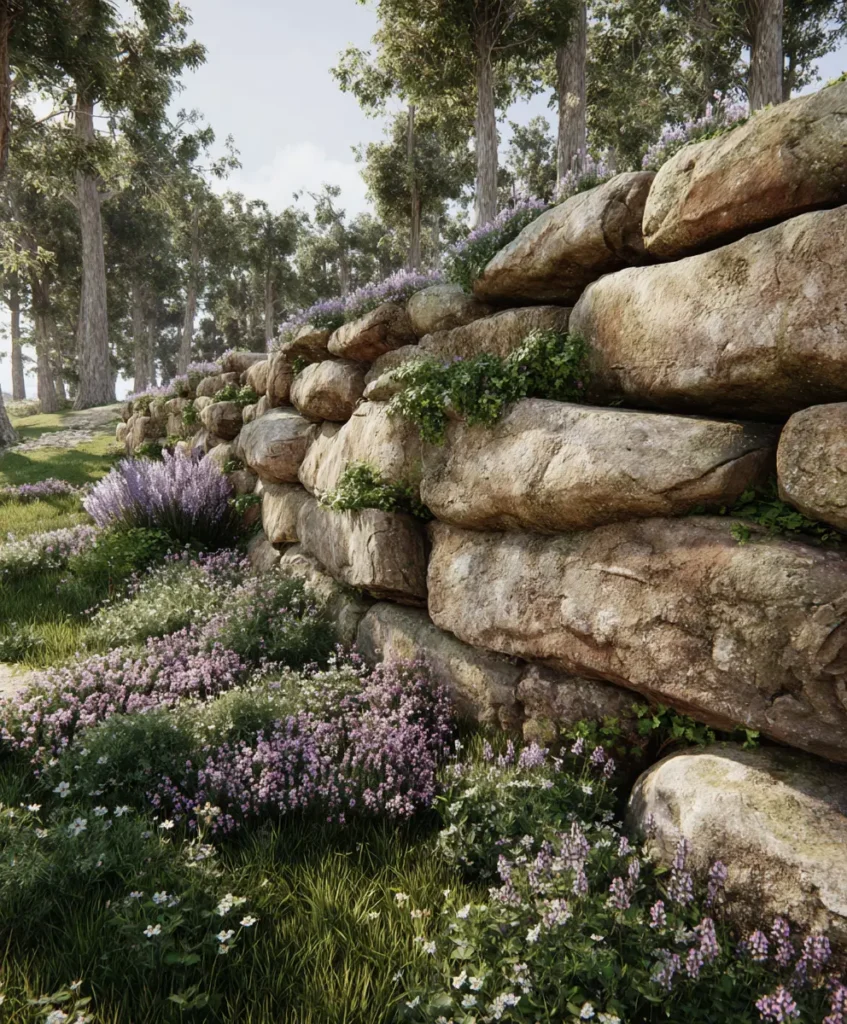
You can stack large boulders for a rugged look or choose cut stone for a clean, polished style. Stone works well in both modern and traditional landscapes.
Benefits of Stone Walls
- Durability: Stone lasts for decades with minimal maintenance.
- Visual Appeal: Each stone carries a unique texture and color.
- Versatility: Suitable for garden beds, slopes, or property boundaries.
I once helped a neighbor design a stone wall around her flower beds. It immediately elevated her yard, creating depth while protecting her plants from erosion.
If you want to add even more interest, consider mixing different stone types or sizes to give your wall a layered, natural look. Adding plants like lavender or creeping thyme at the base can soften the structure and bring fragrance to your outdoor space.
Concrete Retaining Walls: Strength Meets Sleek Design
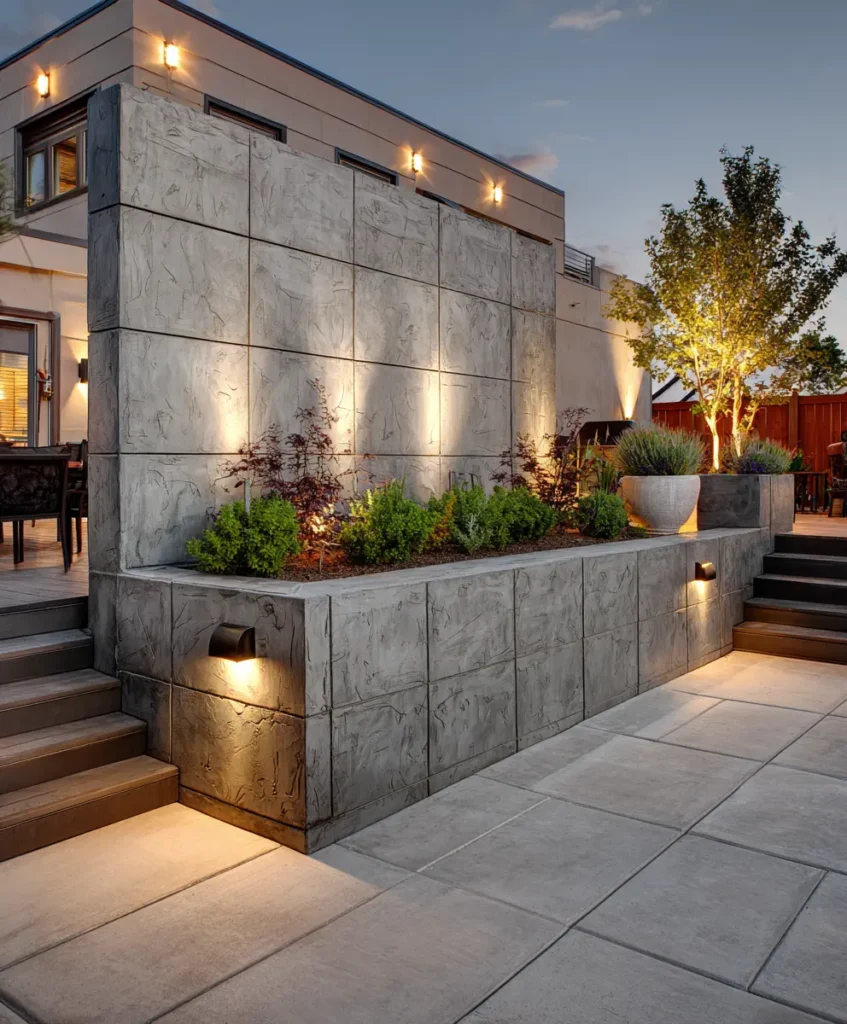
Concrete walls often intimidate homeowners because they seem cold. However, when finished with decorative patterns or paint, they become striking architectural features. Concrete remains one of the most durable retaining wall ideas.
Ways to Style Concrete Walls
- Stamped or textured finishes mimic brick or natural stone.
- Adding modern lighting highlights the structure at night.
- Pairing concrete with wood creates a warm, balanced look.
Concrete also offers flexibility in height and shape. For example, tall concrete walls can create privacy barriers, while shorter ones work beautifully for edging raised flower beds.
To avoid a sterile feel, try painting your wall in earthy tones or attaching wooden panels for added texture.
Timber Retaining Walls: Warm and Rustic Charm
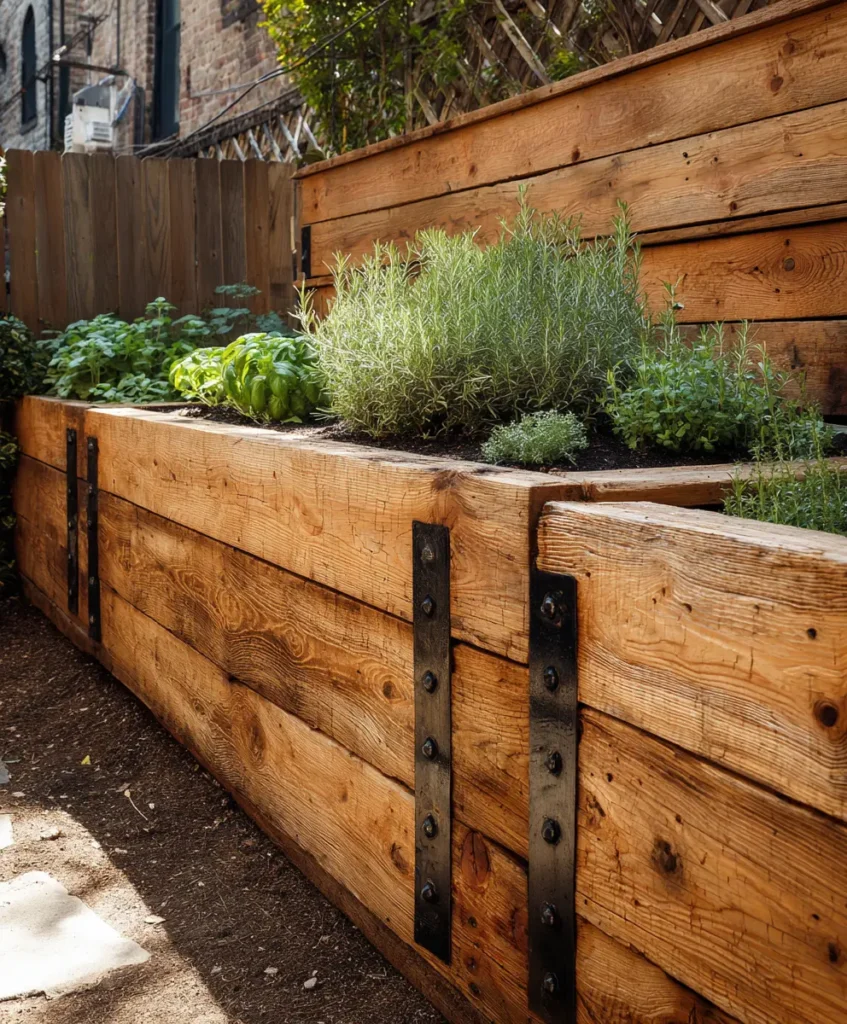
Timber brings a cozy feel to outdoor spaces. Pressure-treated wood can resist rot and last many years if properly maintained. Timber walls are ideal for garden edging or smaller terraces.
Pros and Cons of Timber
Pros:
- Affordable compared to stone or concrete.
- Easy for DIY enthusiasts to install.
- Naturally complements greenery and outdoor décor.
Cons:
- Requires regular sealing or staining.
- May not last as long as stone or concrete.
I built a small timber wall to frame my herb garden, and the warm tones of the wood made the space feel instantly inviting.
If you want to extend its lifespan, consider using hardwoods like cedar or redwood, which resist decay better than pine. Adding decorative metal brackets or caps can also elevate the design.
Gabion Retaining Walls: Industrial and Creative
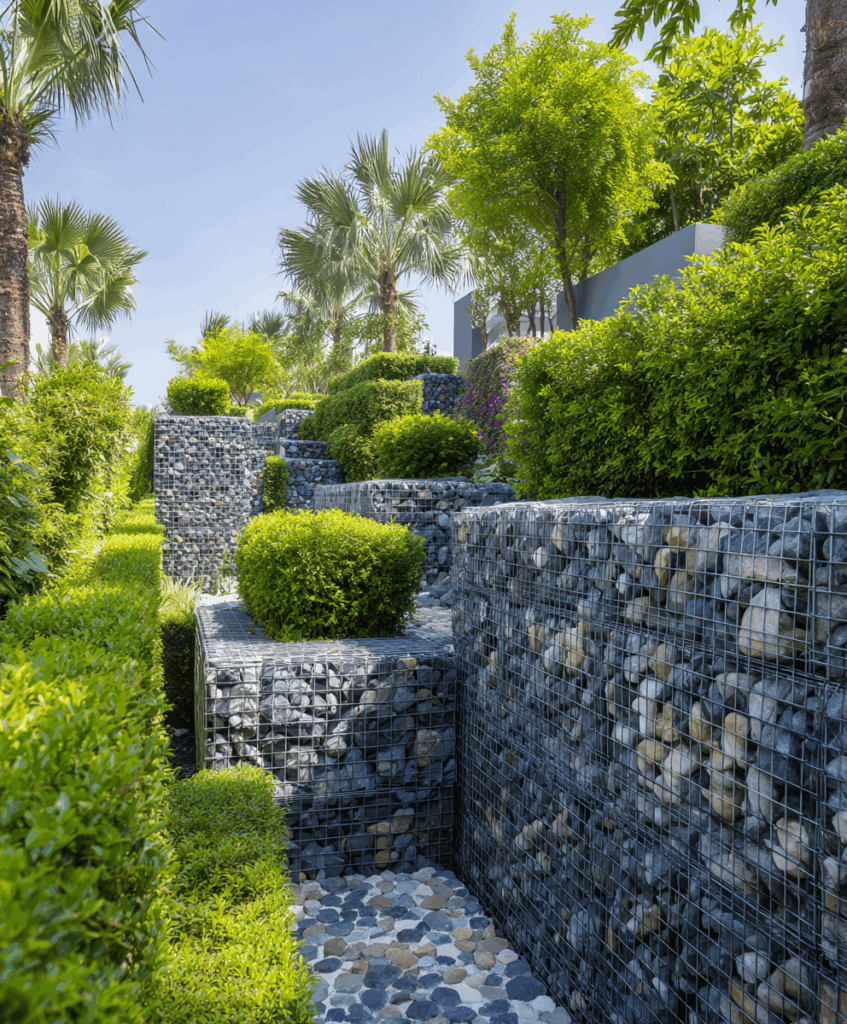
Gabion walls consist of wire cages filled with rocks, bricks, or even recycled materials. They create a bold, industrial look that doubles as a sustainable option.
Why Gabions Stand Out
- Eco-friendly by reusing materials.
- Flexible design options, from sleek to rugged.
- Excellent drainage prevents water buildup.
Imagine filling gabion baskets with river stones or even wine bottles for a quirky, personal touch. This makes retaining wall ideas not just functional, but a creative statement.
Gabion walls also pair well with modern minimalist landscapes. For a softer effect, plant greenery around or through the cages so the structure blends with the environment.
Tiered Retaining Walls: Maximize Space and Style
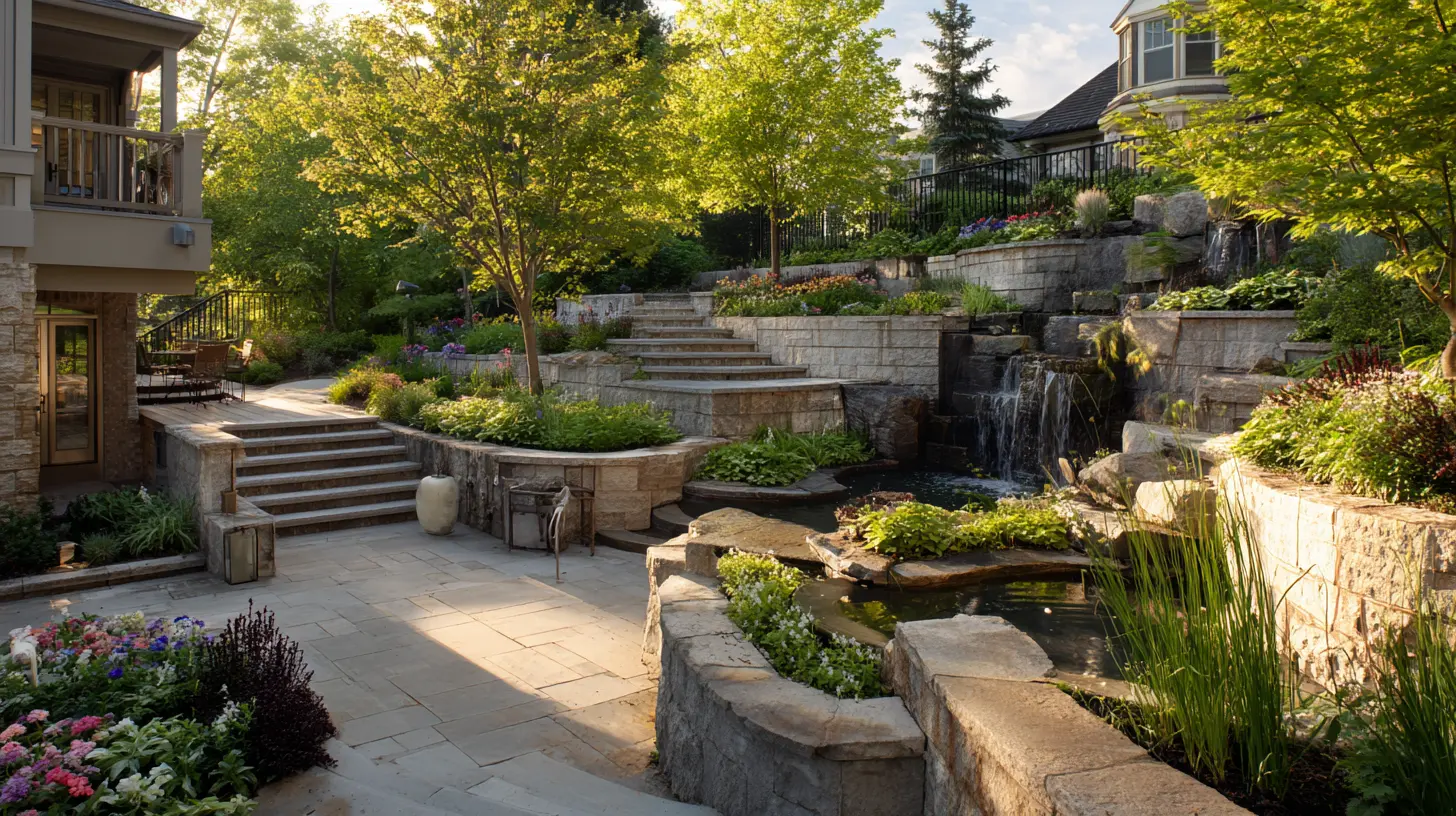
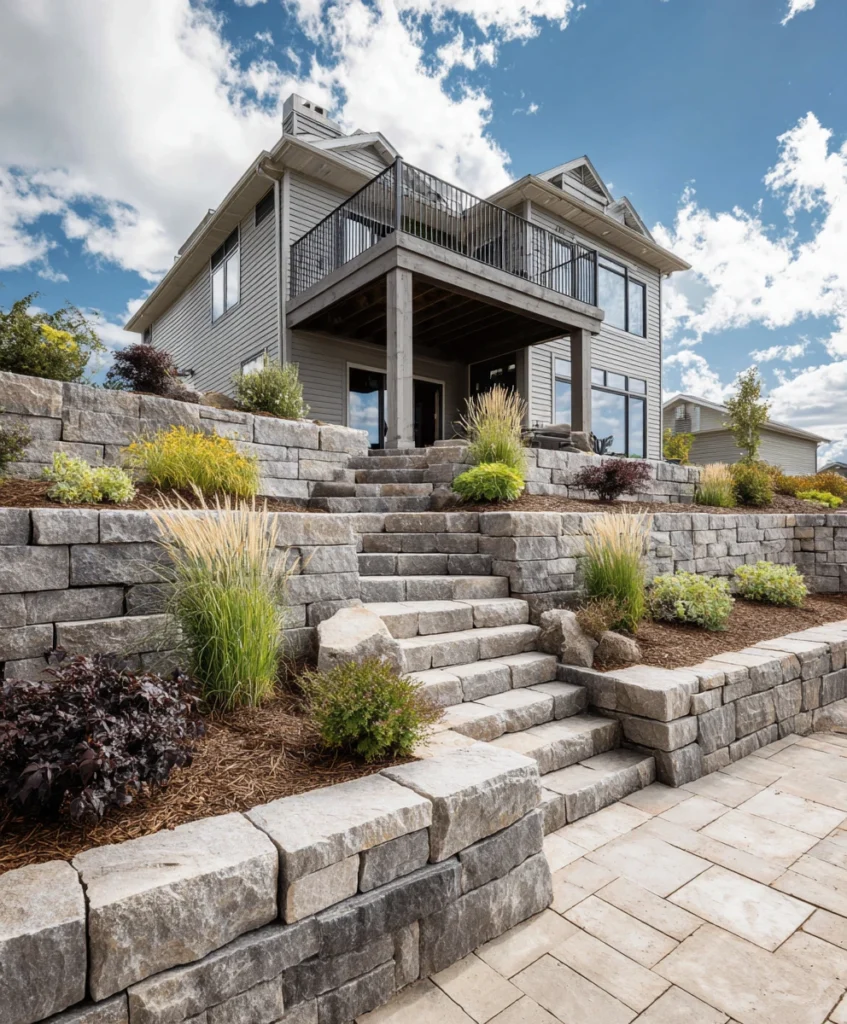
Tiered retaining walls shine in sloped yards. Instead of a single tall wall, multiple shorter walls create layers, turning an unusable slope into terraced gardens.
Benefits of Tiered Designs
- Prevents soil erosion more effectively.
- Adds multiple planting levels for flowers, shrubs, or vegetables.
- Creates dynamic depth and visual interest.
A friend transformed her steep backyard into a series of raised beds with tiered walls. Now she enjoys a vegetable garden that thrives on each level.
Adding stairs or stepping stones between the tiers enhances both function and style. To personalize your tiers, vary the materials; stone on the bottom, timber on the middle, and concrete on the top for a multi-textured look.
Retaining Walls with Built-In Seating
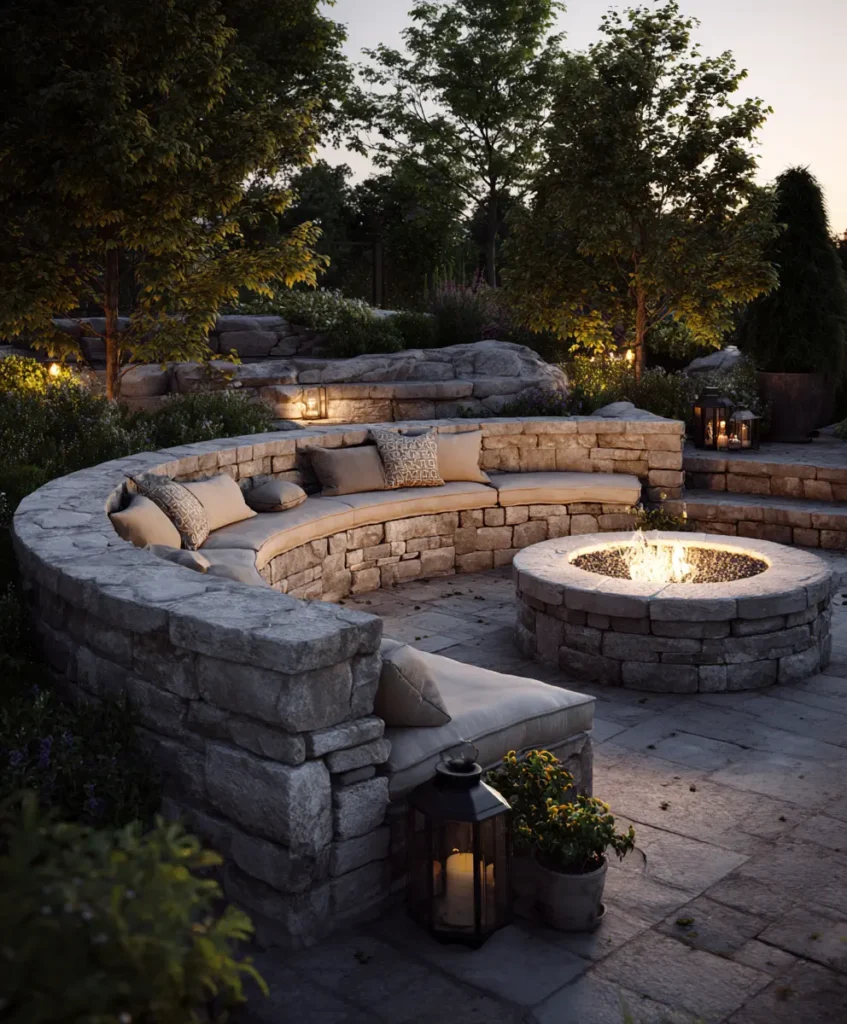
Combining seating with a retaining wall adds function and saves space. Imagine a stone wall that doubles as a bench around your fire pit. You get both stability and a social spot for guests.
Where Built-In Seating Works Best
- Around patios or decks.
- Near fire pits or outdoor kitchens.
- Along garden edges for casual seating.
This idea works well in smaller yards where every inch matters. Adding cushions or weather-resistant pillows can make the seating more comfortable.
In larger spaces, you can extend the seating wall around multiple sides of a patio for a cohesive, welcoming layout.
Decorative Retaining Walls with Plants
Walls don’t have to feel rigid. Adding greenery softens their look and makes them feel alive. You can design planters directly into the wall or let vines cascade down its surface.
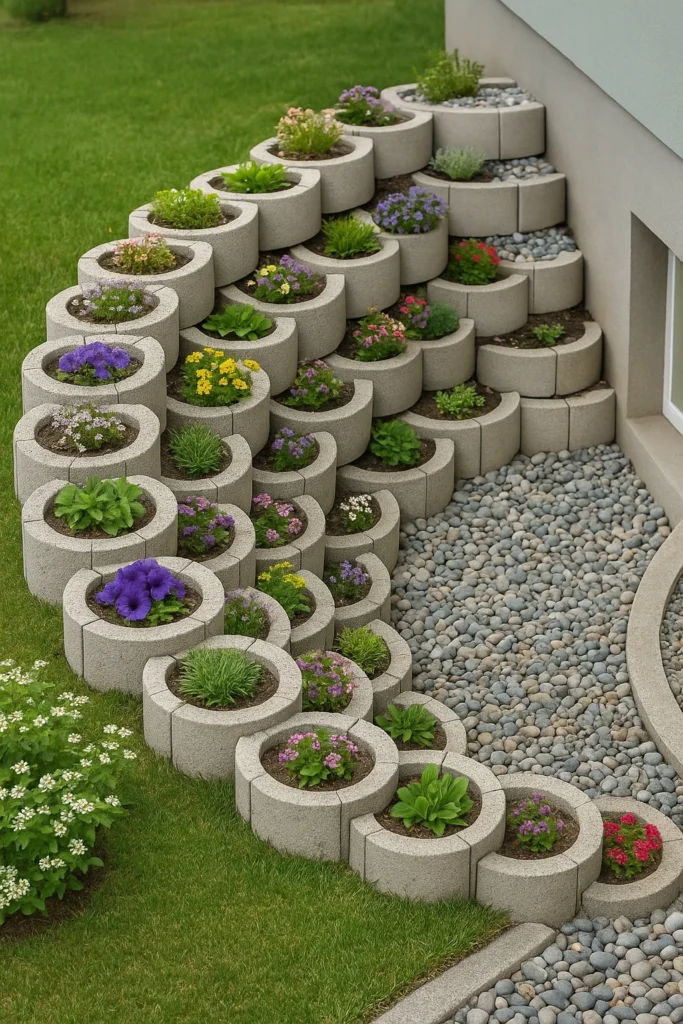
Planting Ideas for Retaining Walls
- Succulents for modern, low-maintenance appeal.
- Flowering vines like clematis for vibrant color.
- Ferns or moss for a natural, woodland feel.
One of my favorite retaining wall ideas involves planting creeping thyme between stones. It adds fragrance and color while requiring little care.
For a bold effect, consider integrating a vertical garden within the wall itself. This turns a simple retaining wall into a living piece of art.
Retaining Walls with Water Features
For homeowners who love a touch of luxury, incorporating water features into retaining walls creates a serene, resort-like atmosphere. Imagine a waterfall cascading over a stone wall into a koi pond.
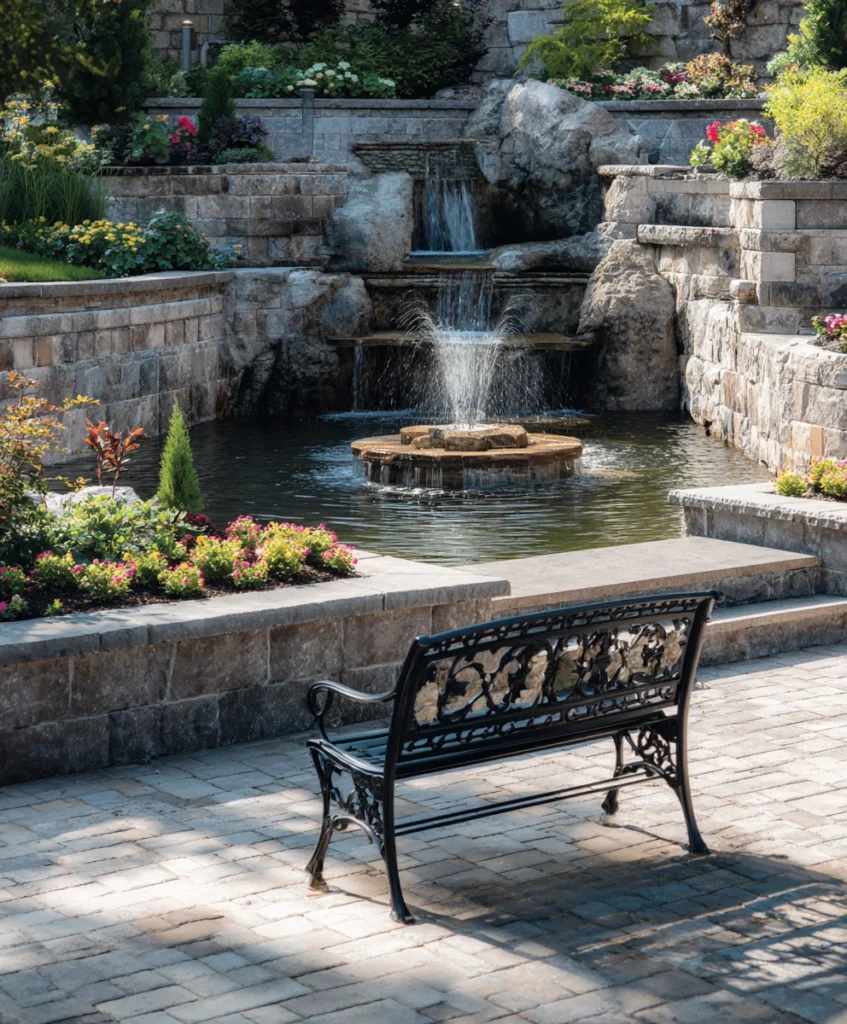
Benefits of Adding Water
- Enhances relaxation with soothing sounds.
- Increases property value with a high-end look.
- Attracts birds and wildlife.
While this option requires more investment, it transforms your backyard into a true escape.
Smaller spaces can benefit too, try adding a wall fountain that trickles water into a basin. Pairing water with lighting creates an even more dramatic evening effect.
Modern Retaining Walls with Lighting
Lighting elevates the look of a retaining wall after sunset. Recessed LED lights or solar uplights add drama and improve safety.
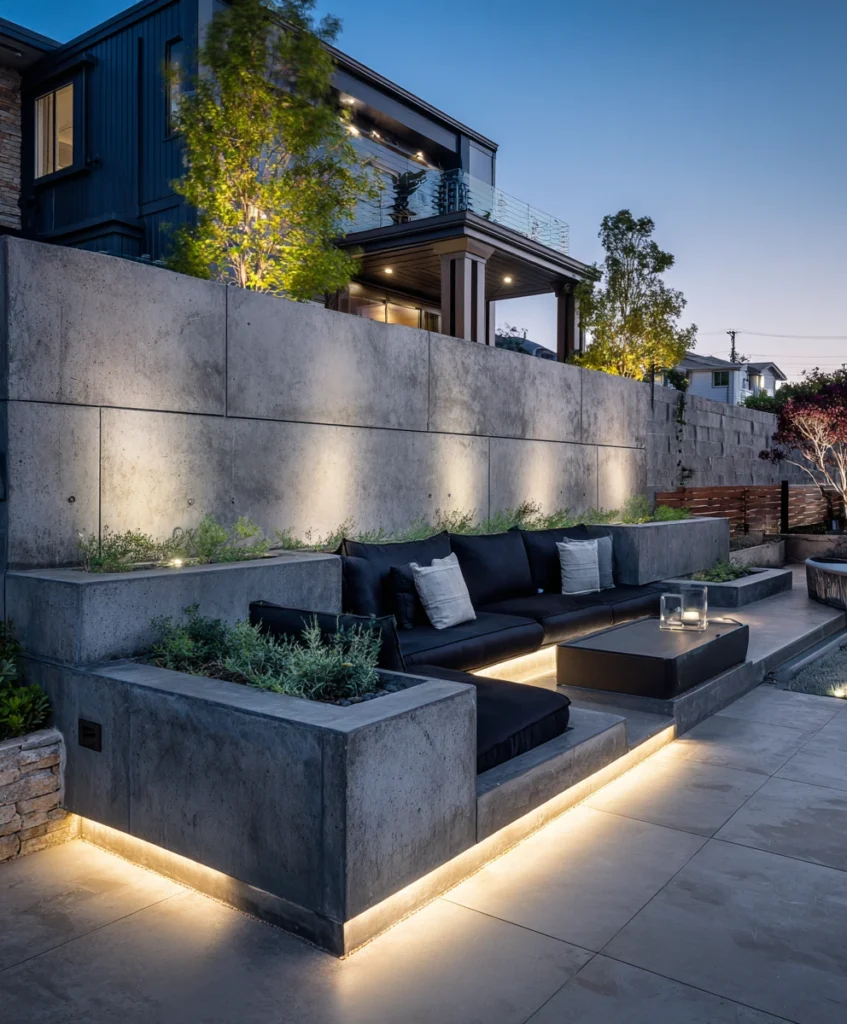
Lighting Design Tips
- Place lights beneath wall caps for subtle illumination.
- Use warm lighting for cozy patios.
- Highlight pathways or stairs for both beauty and function.
A well-lit wall not only prevents trips at night but also extends your outdoor entertaining hours. You can also use colored LED lights to highlight different areas, creating moods for parties or quiet evenings outdoors.
Eco-Friendly Retaining Walls with Recycled Materials
Sustainability matters more than ever. Using recycled tires, reclaimed wood, or repurposed stone keeps waste out of landfills while adding character.
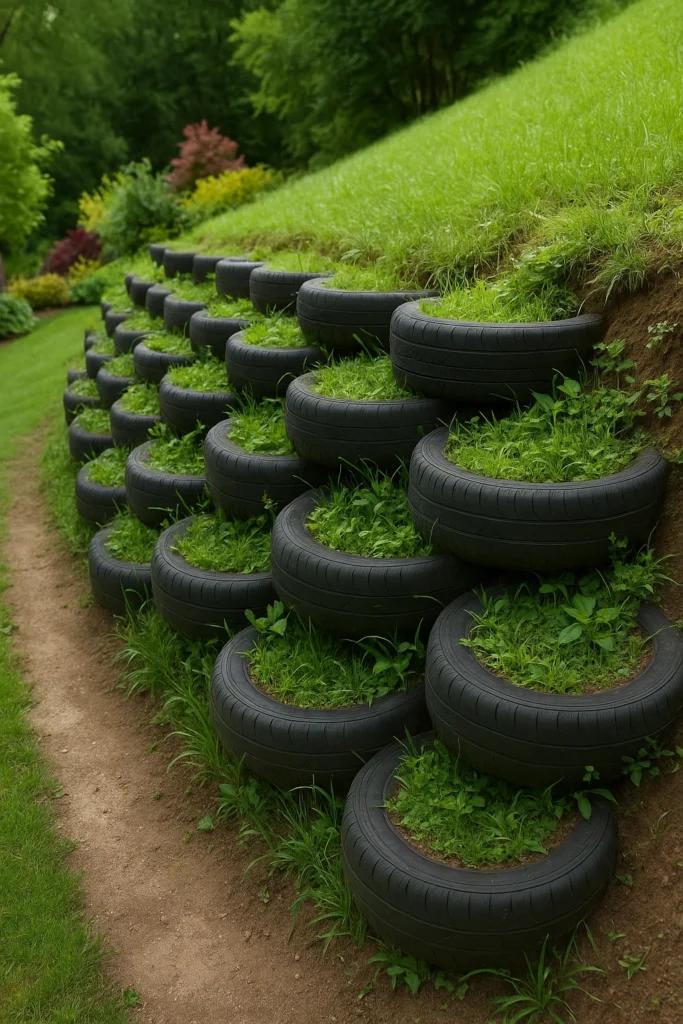
Why Recycled Walls Work
- Affordable material sources.
- Each wall tells a story through its reclaimed elements.
- Environmentally conscious choice for eco-friendly homeowners.
I once saw a wall made entirely of salvaged bricks from an old farmhouse, and it gave the yard a historic charm that new materials couldn’t replicate.
If you enjoy DIY projects, sourcing recycled materials locally can also save costs while creating a unique one-of-a-kind structure.
Curved Retaining Walls: Soft and Organic Flow
Most retaining walls look straight and rigid, but curved walls create a softer, more natural flow in landscapes. They help guide the eye and break the monotony of straight lines.
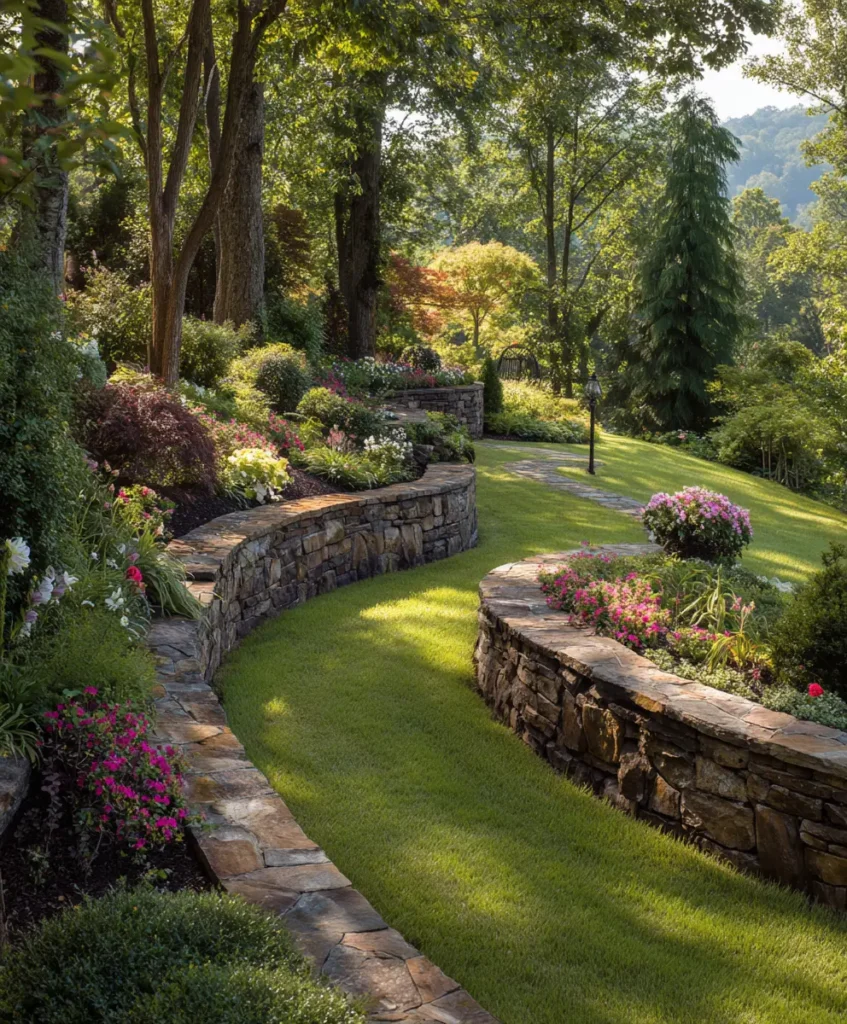
Why Curves Work
- Enhance garden pathways with organic shapes.
- Provide extra planting pockets in curved sections.
- Create a more inviting, fluid landscape.
When I visited a botanical garden last summer, I noticed how curved stone walls directed foot traffic while blending perfectly with the natural setting.
For homeowners, curved walls can create cozy sitting areas or unique garden enclosures that stand apart from standard designs.
Mixing Materials for Custom Style
Who says you have to stick with just one material? Combining stone with wood or concrete with metal accents gives your retaining wall a personalized flair.
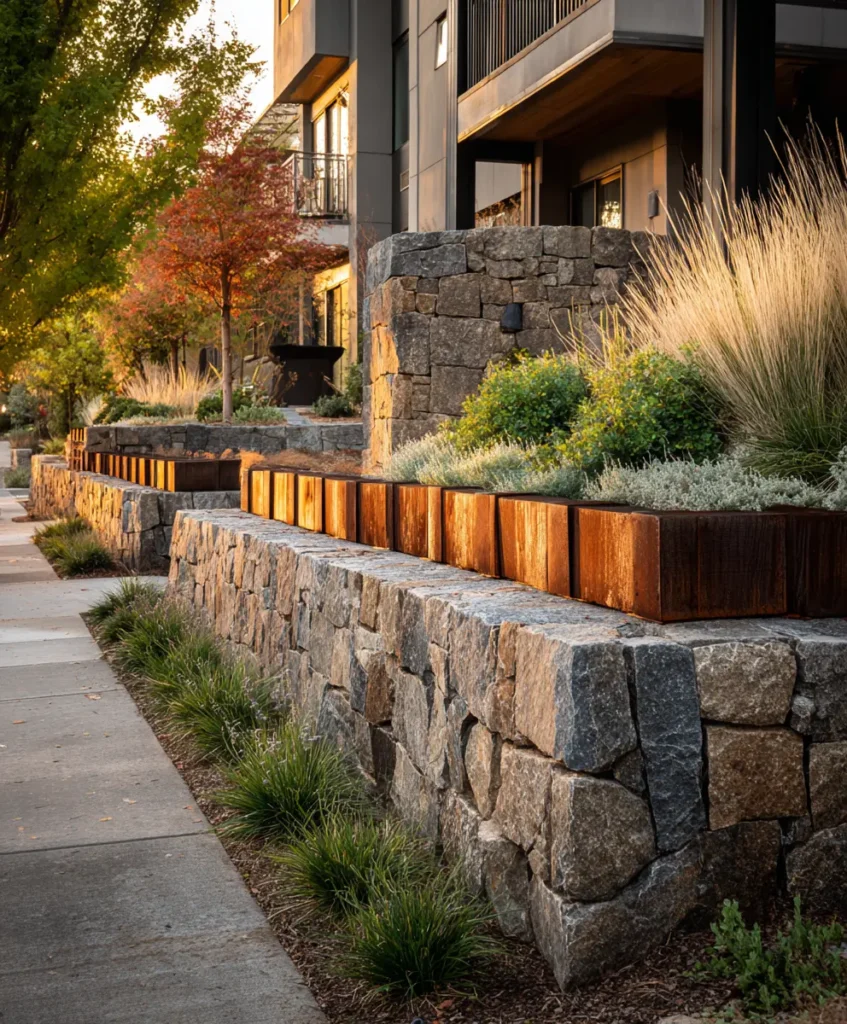
Popular Combinations
- Stone with wood caps for rustic-modern contrast.
- Concrete paired with steel for sleek, industrial vibes.
- Gabions mixed with timber frames for texture variety.
This approach allows you to tailor the design to your home’s architecture and your personality. Mixing materials also ensures your wall feels less predictable and more visually engaging, making it a conversation starter whenever guests visit.
Conclusion: Building Walls That Work Hard and Look Beautiful
Retaining wall ideas go far beyond functionality. They add structure, style, and personality to your outdoor spaces. From natural stone to modern concrete, timber charm to eco-friendly gabions, there’s a style for every homeowner.
When you choose the right design, your wall becomes more than just a solution, it becomes a centerpiece. With twelve durable and stylish options to inspire you, you now have the tools to transform your yard into a space that’s practical and beautiful.
Start small, dream big, and build a wall that keeps your landscape both durable and stylish.