Xeriscape Landscaping: 12 Ideas For a Water-Smart Yard.
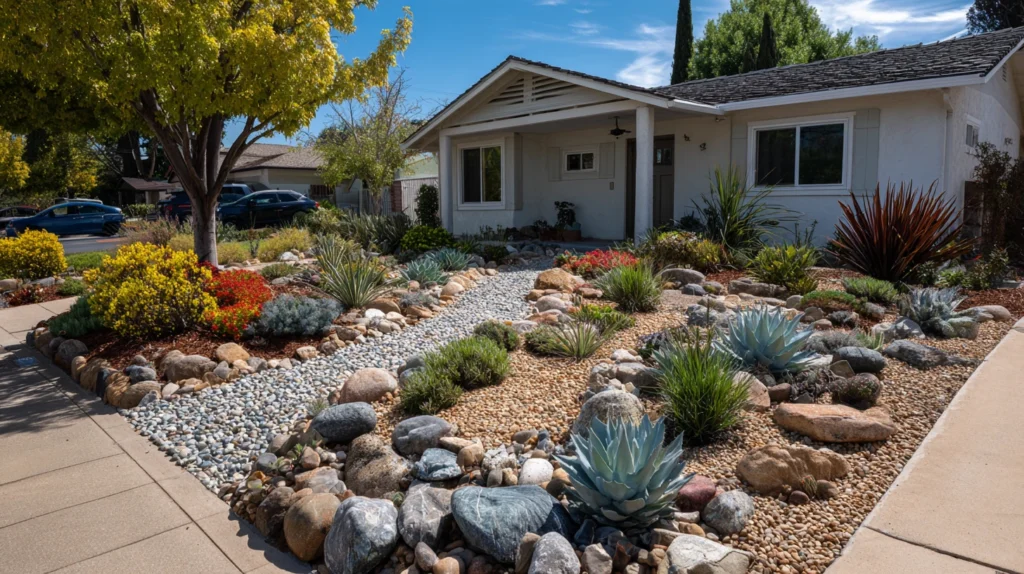
Have you ever thought of alternatives to your lawn that needs constant watering but still looks tired in the summer heat? Xeriscape landscaping offers a fresh solution.
By replacing thirsty turf with serene desert gardens full of native plants, gravel paths, and sculptural succulents, you can create a yard that looks vibrant year-round while saving money and conserving resources.
If you’ve been searching for a way to save water while keeping your yard beautiful and eco-friendly, you’ll love these ideas for a water-smart yard.
1. Start With Native and Drought-Tolerant Plants
Native plants naturally thrive in your climate and require far less water than exotic species. For instance, in the Southwest, agave and desert marigolds flourish with minimal irrigation. In Colorado, ornamental grasses like blue fescue handle dry spells with ease.
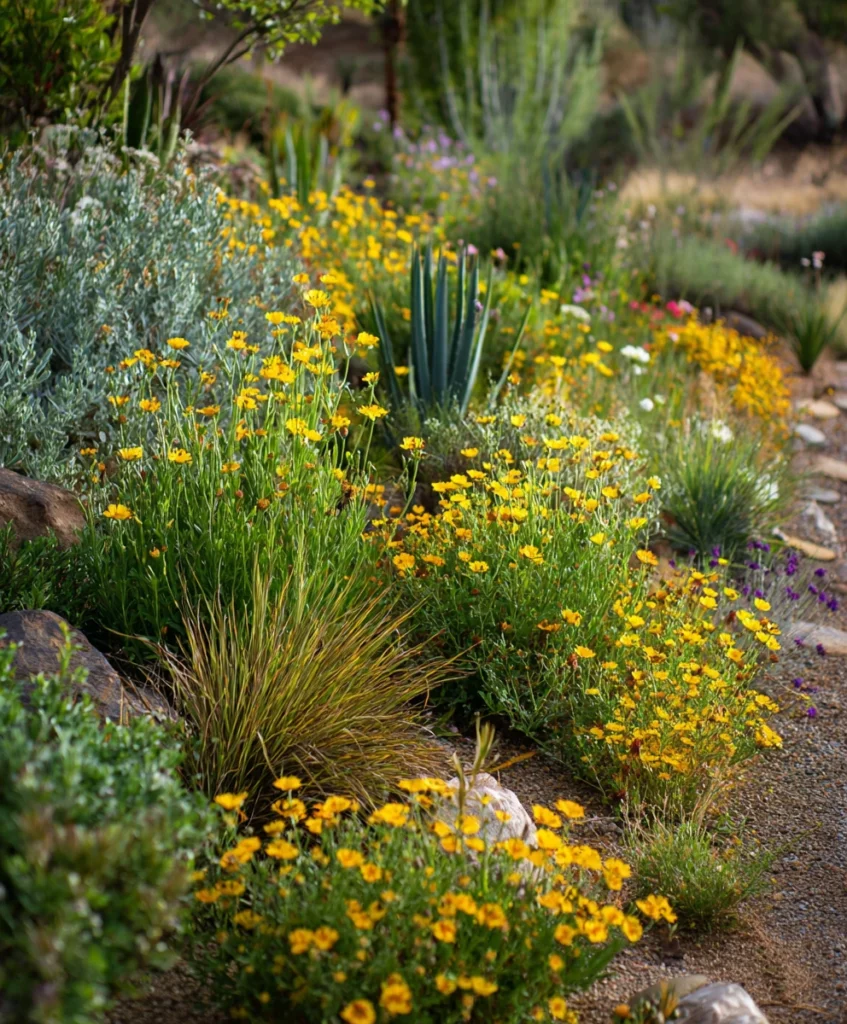
Choosing the right plants makes xeriscape landscaping simple and rewarding.
Pro Tip: Visit a local nursery for recommendations on drought-tolerant plants that attract pollinators. You’ll create a water-smart ecosystem while supporting local wildlife.
Many homeowners find that their new landscapes not only save water but also invite butterflies and hummingbirds, adding life and motion to their yards.
2. Replace Grass With Gravel or Decorative Stones
Grass lawns guzzle water, especially in hot climates. Replacing thirsty turf with gravel, pea stone, or decomposed granite cuts down on waste while still giving your yard a clean, polished look. These materials add texture and contrast, giving your landscape layers of interest.
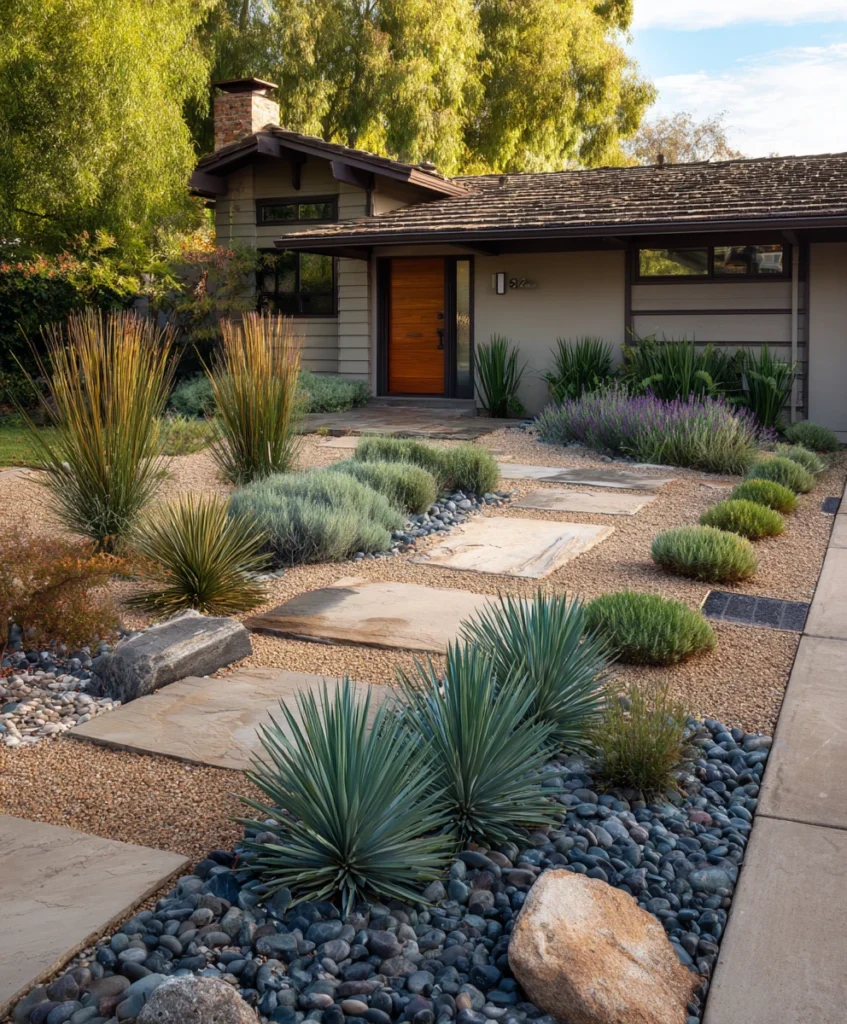
A friend of mine swapped out her entire front lawn for smooth river rock accented with yuccas and lavender. The result? A modern, sculptural look that neighbors admire daily.
Plus, she reduced her summer water bill by more than 40%. When designed well, a stone-based landscape feels intentional and inviting rather than barren.
3. Create Defined Planting Zones
Instead of spreading plants across the yard, group those with similar water needs together. This practice, called hydrozoning, ensures efficient irrigation and reduces waste.
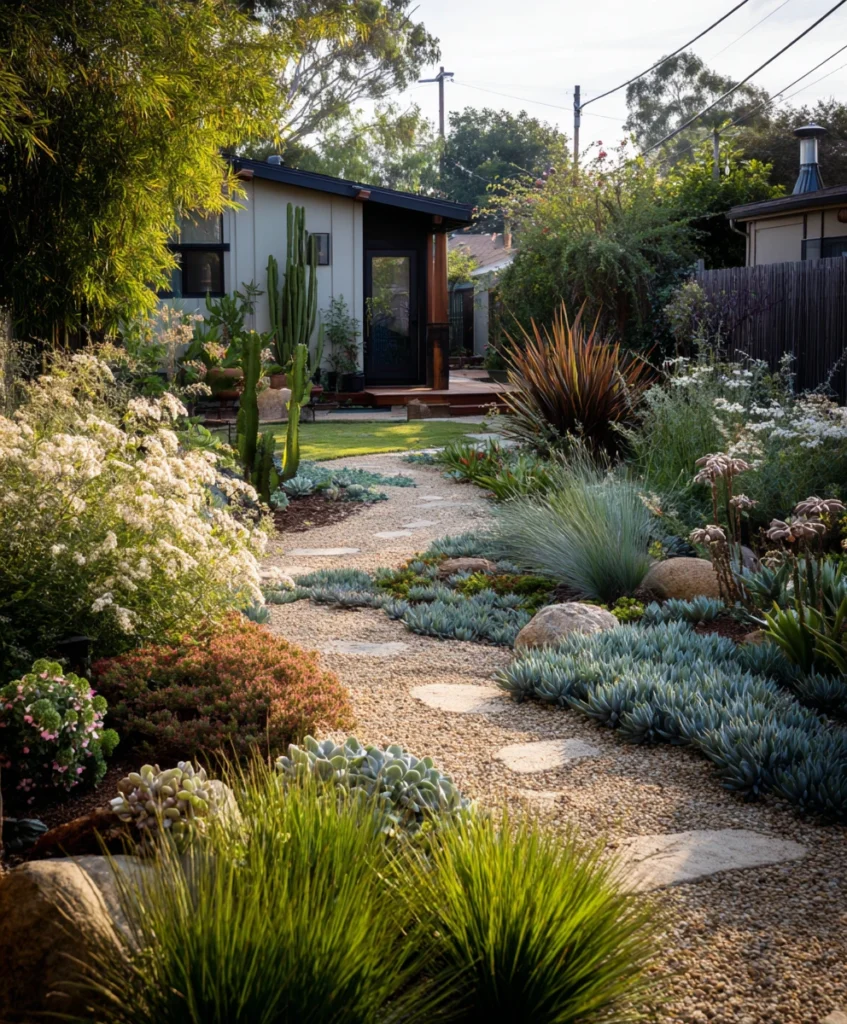
When you place thirsty plants like herbs or flowers together, you can target water to them instead of soaking the entire yard.
Benefits of Hydrozoning
- Lower water consumption
- Easier irrigation management
- Healthier, longer-lasting plants
With hydrozoning, you can create beautiful clusters of color while maintaining strict water efficiency. It makes gardening more practical, especially for larger spaces.
4. Create a Dry Creek Bed for Natural Drainage
A dry creek bed does more than add visual charm, it also helps manage stormwater runoff and prevent erosion.
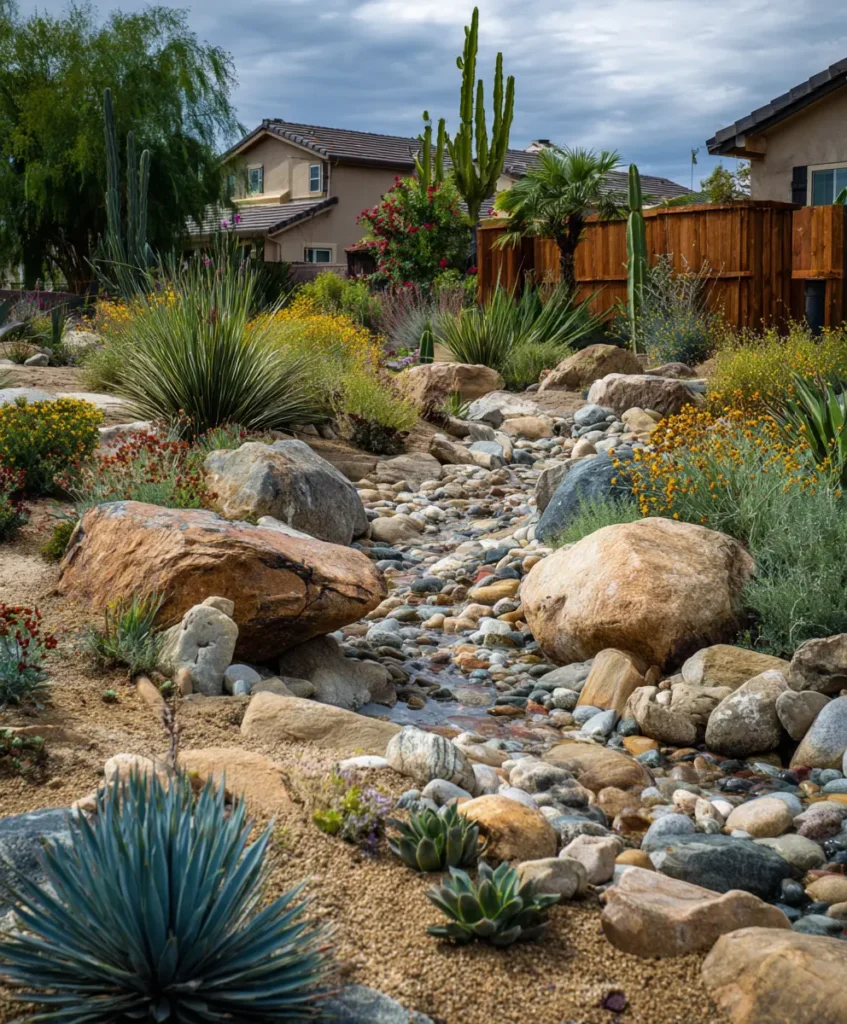
By lining a shallow trench with smooth river rocks, boulders, and gravel, you can mimic the look of a natural stream while guiding excess water safely away from your home and plants.
This technique blends functionality with beauty, making it a perfect fit for xeriscape landscaping.
Design Tip: Plant drought-tolerant species like agave, yucca, or ornamental grasses along the banks of the creek bed. Their shapes and textures contrast beautifully with the rocks while holding the soil in place.
During heavy rain, the creek bed channels water, and in dry times, it remains an eye-catching landscape feature.
5. Mulch for Moisture Retention
A simple layer of mulch keeps soil cooler, reduces evaporation, and discourages weeds. Organic mulch like bark chips also enriches the soil as it breaks down.
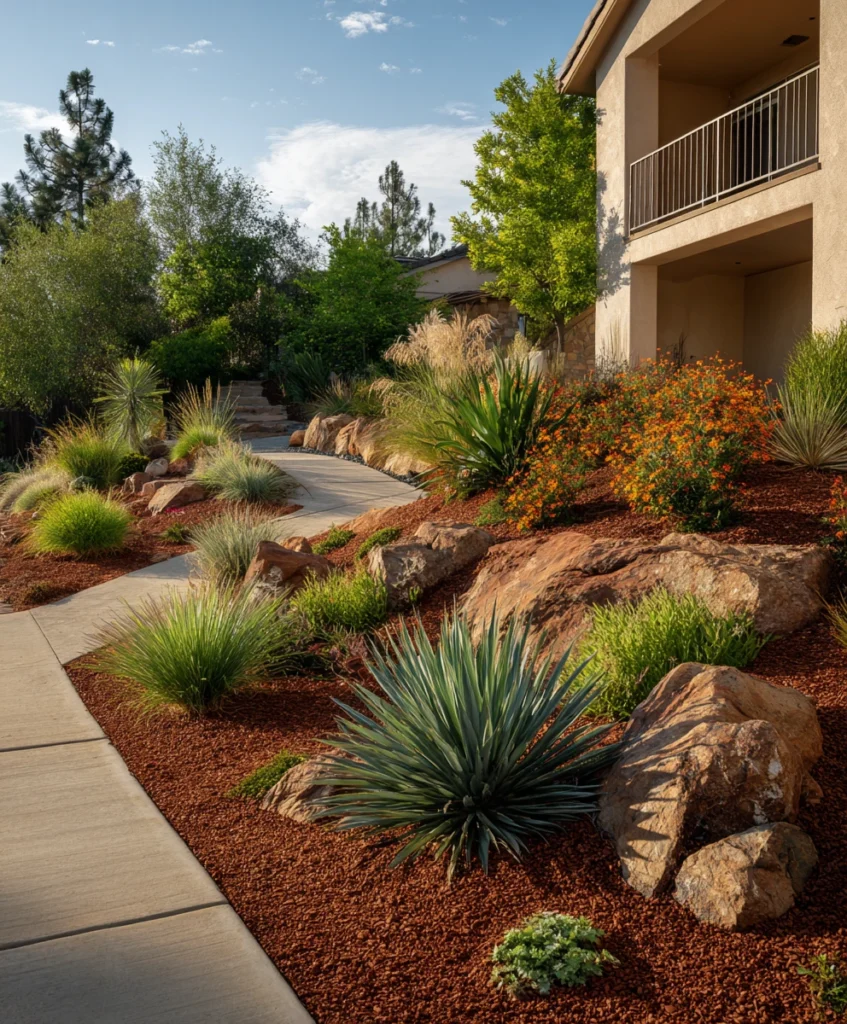
Inorganic options like decorative gravel or crushed stone provide a clean, modern look while still helping to regulate soil temperature.
Quick Tip: Spread mulch about 2–3 inches deep, but keep it an inch away from plant stems to prevent rot.
When done properly, mulching reduces your watering schedule dramatically and keeps your plants healthier all season long.
6. Incorporate Hardscaping for Structure
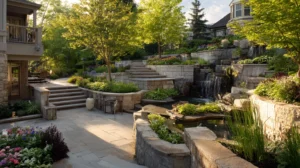
Pathways, patios, and stone walls add visual interest while minimizing water needs. Think of these as “functional beauty” elements that break up planting zones and reduce irrigation areas.
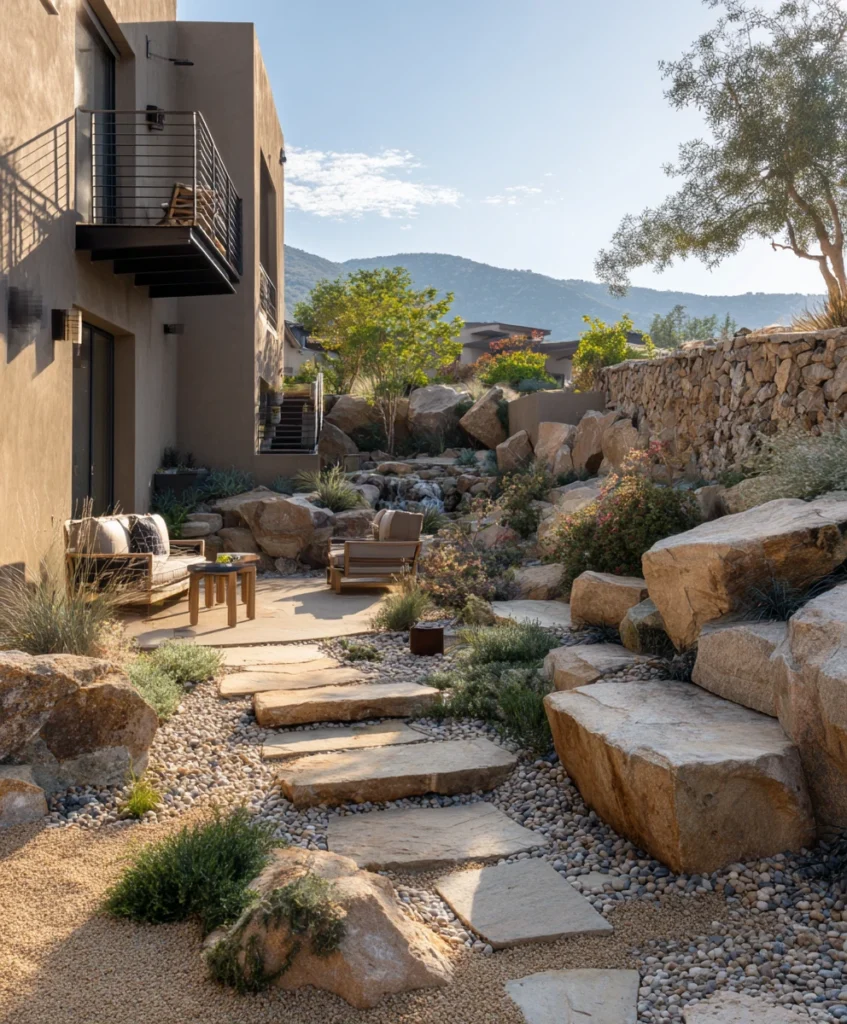
Hardscaping creates balance and flow, guiding the eye through your yard while requiring zero water.
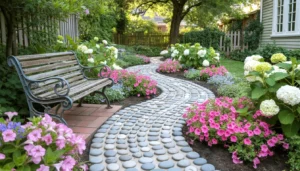
Design Idea: Combine flagstone paths with pockets of drought-tolerant groundcovers like creeping thyme. You’ll achieve a lush look without the water demands of a traditional lawn.
Stone seating areas or gravel courtyards also add charm and usability while staying eco-friendly.
7. Highlight Succulents and Cacti
Few plants symbolize xeriscape landscaping like succulents and cacti. Their sculptural shapes and low-water habits make them showstoppers in any yard.
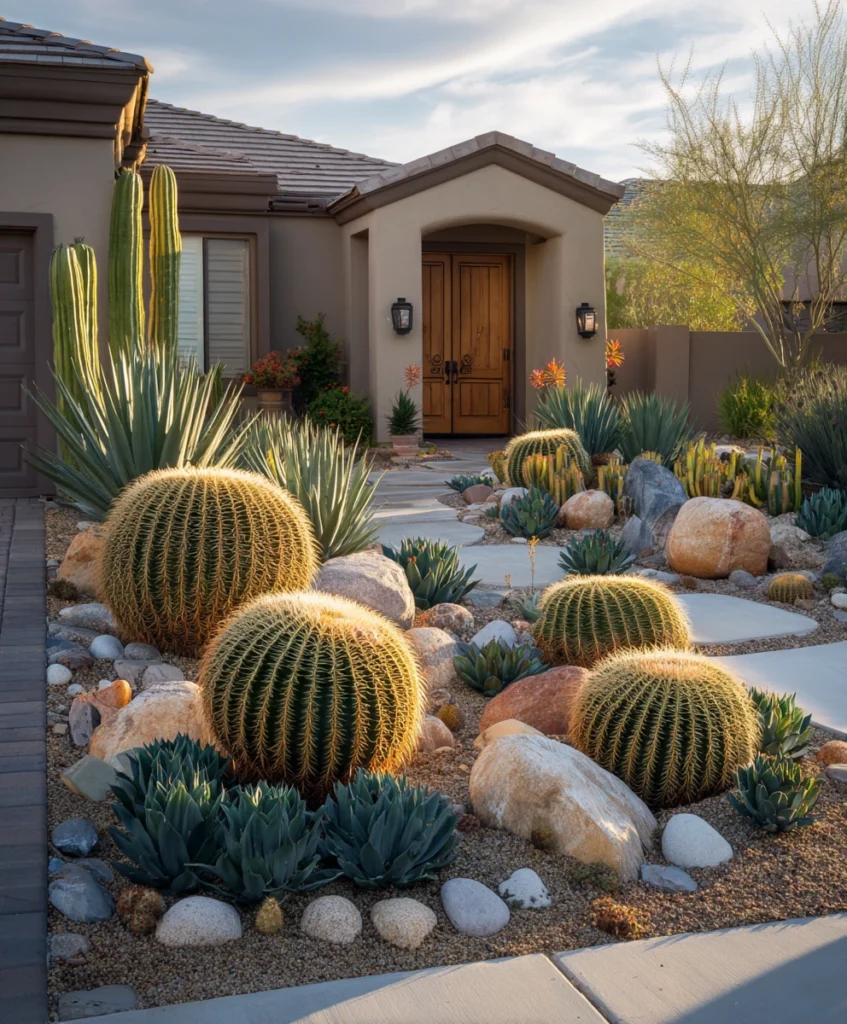
Whether you live in the desert or the suburbs, succulents offer year-round beauty with minimal care.
Popular Choices
- Golden barrel cactus
- Echeveria rosettes
- Aloe vera
Arrange them in clusters or feature them as focal points in containers for a bold, modern look. These plants also thrive in vertical gardens and raised beds, giving you flexibility to get creative.
8. Use Decorative Containers and Raised Beds
Containers let you control soil quality and conserve water by focusing resources on a specific area.
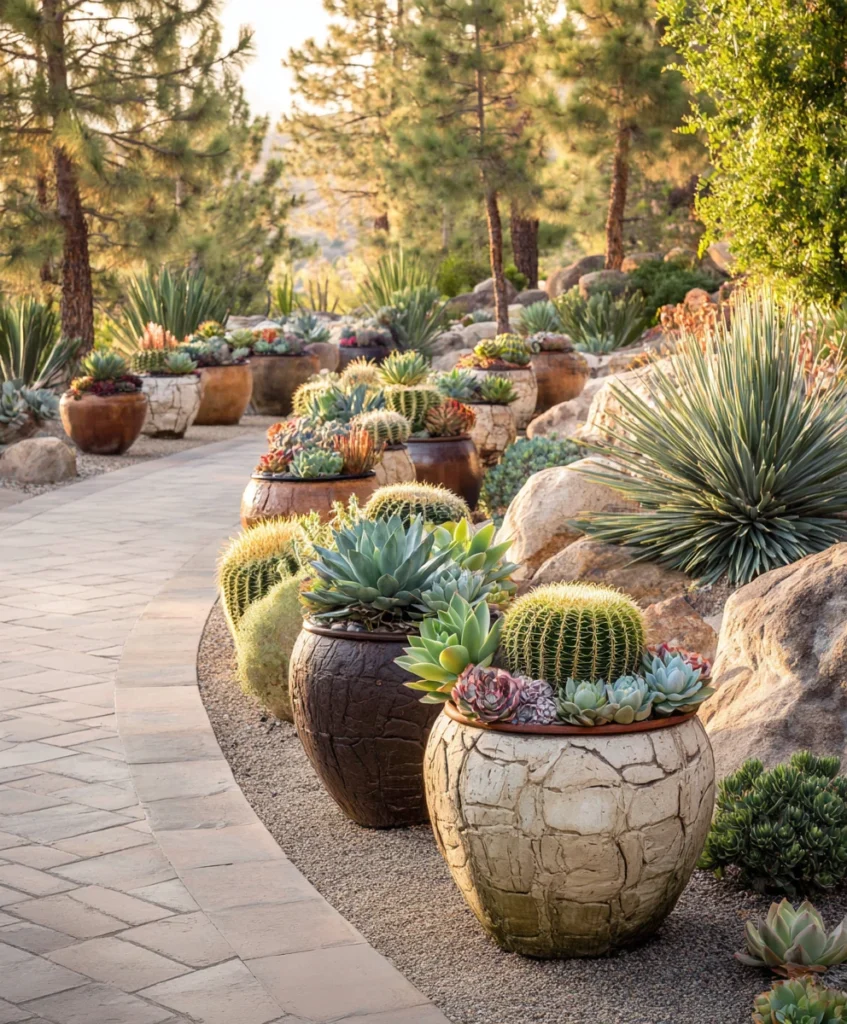
Raised beds also make gardening easier and more organized. They’re perfect for herbs, vegetables, or compact ornamentals.
I’ve seen homeowners line their patios with terracotta pots filled with drought-resistant herbs like rosemary and sage. Not only do they add fragrance, but they also provide fresh seasoning for dinner.
A cluster of pots becomes a centerpiece that ties together outdoor living spaces.
9. Integrate Water-Wise Groundcovers
Groundcovers like sedum, creeping juniper, or thyme reduce soil erosion and suppress weeds. They act as living mulch and require little irrigation once established.
Groundcovers bring color and texture to otherwise plain areas while protecting the soil underneath.
Benefit: Unlike grass, these groundcovers thrive with far less water and maintenance. Many even release pleasant scents when walked on, turning pathways into sensory experiences.
10. Add Shade With Trees and Pergolas
Shade reduces evaporation and creates cooler microclimates for your plants. Strategically placed trees or pergolas also make outdoor living more comfortable by blocking harsh afternoon sun.
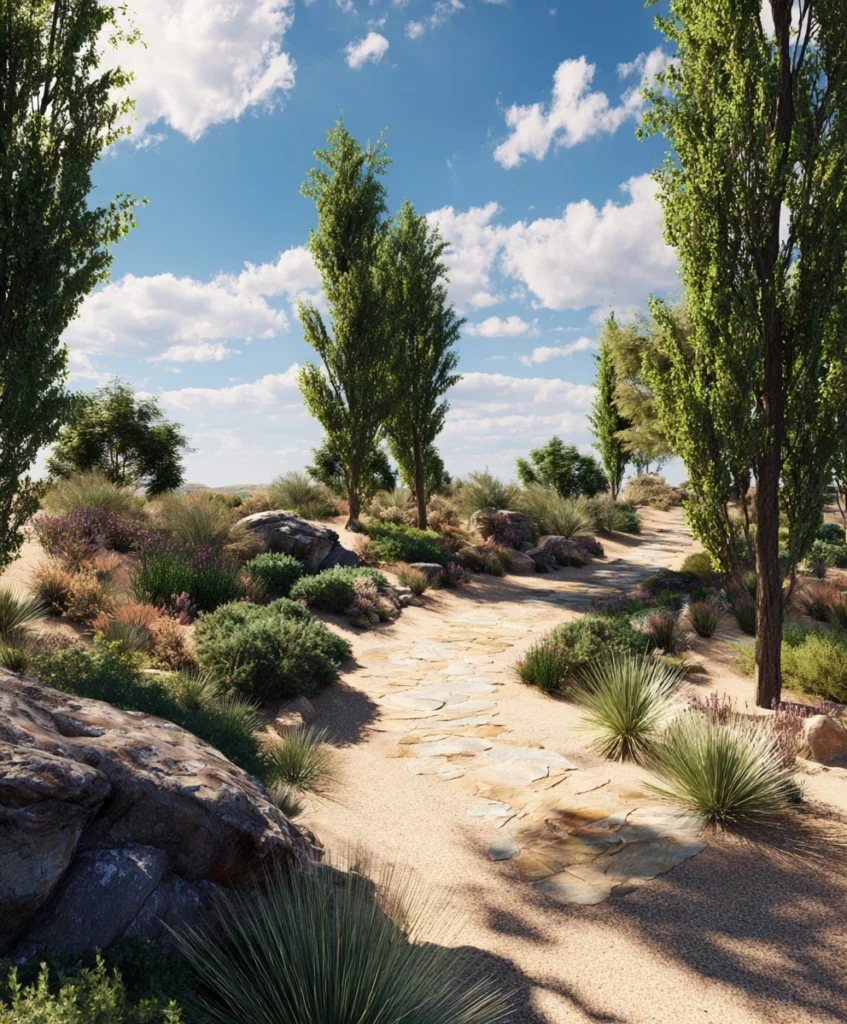
Pro Tip: Choose drought-tolerant trees such as mesquite or olive. Pair them with climbing vines like wisteria or bougainvillea to create a lush canopy effect without increasing water demand.
A shaded sitting area turns your xeriscape into a retreat, not just a water-saving landscape.
11. Design With Colorful Rock Gardens
Rock gardens combine natural stone with hardy plants to create striking focal points. They require minimal upkeep and blend beautifully into xeriscape designs.
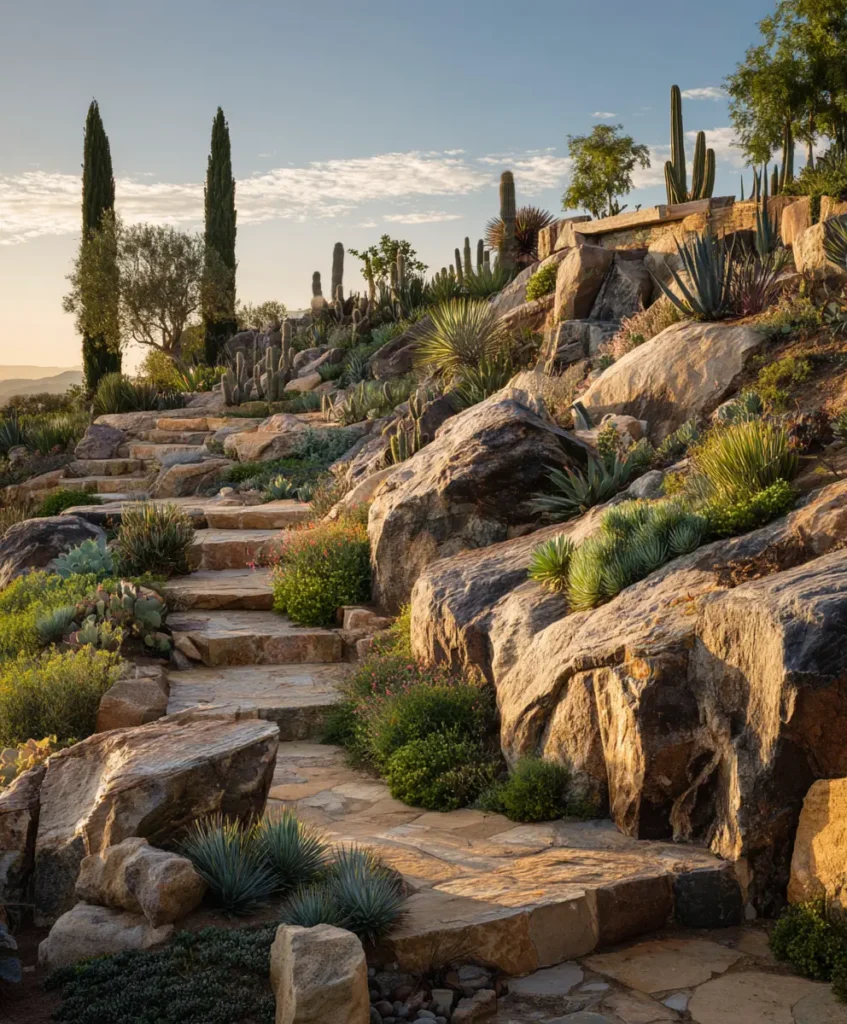
When thoughtfully arranged, rocks bring structure, while plants soften the look and add vibrancy.
Styling Idea: Mix boulders with colorful drought-tolerant perennials like blanket flower or Russian sage for a layered, vibrant look. Adding gravel in contrasting shades enhances depth and visual interest.
12. Add Water Features for Style and Comfort
Many homeowners assume xeriscape landscaping means giving up on water elements, but that isn’t the case. The key is choosing water features that recycle water and require minimal use.
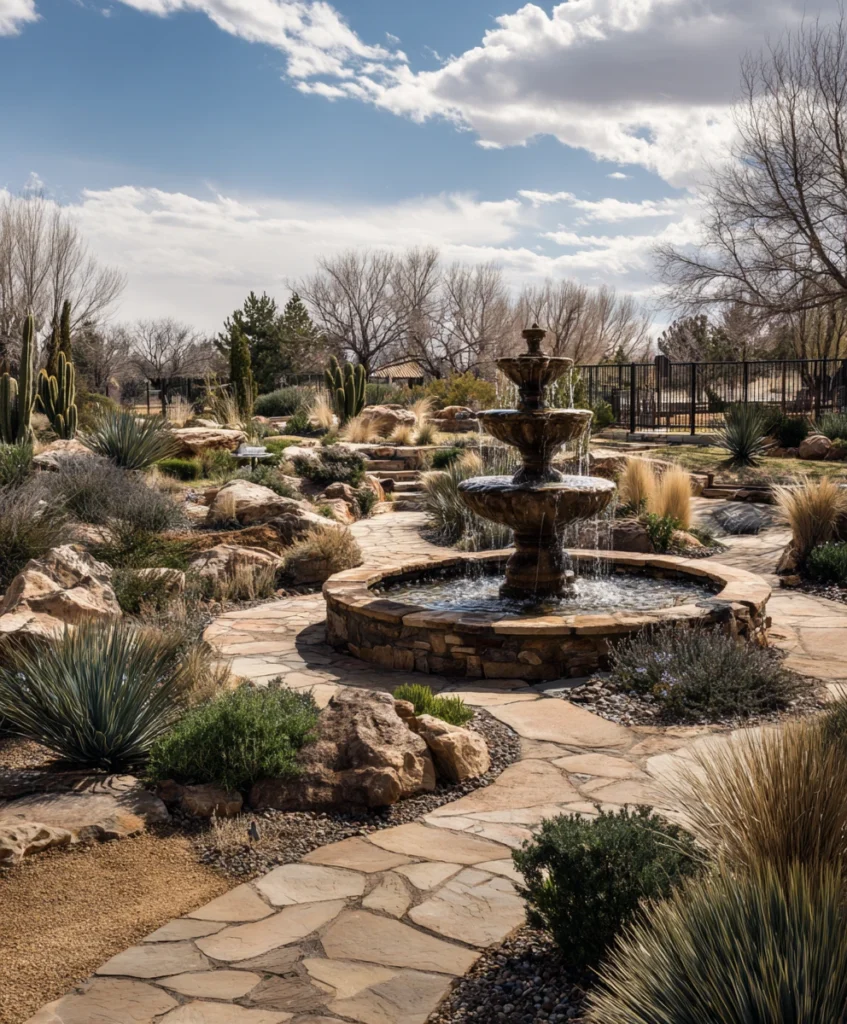
A small pond with a recirculating pump, a tiered fountain, or a bubbling rock can add soothing sound and movement without significant water waste.
Design Tip: Place your fountain or pond near a patio or seating area so you can enjoy the relaxing ambiance. Use drought-tolerant plants, gravel, and natural stones to frame the feature, ensuring it blends seamlessly into your xeriscape design.
By combining smart plant choices with a carefully chosen water feature, you can highlight contrast; dry textures against flowing water for a dramatic yet sustainable effect.
The Big Picture: Beauty Meets Sustainability
Xeriscape landscaping proves you don’t need a lush green lawn to enjoy a beautiful yard. By using native plants, smart irrigation, and creative design features, you can save water while boosting curb appeal.
These ideas provide a roadmap to transform your outdoor space into something both stylish and sustainable.
When I walk through my own yard now, I see more than plants and stones, I see intentional design that respects the environment while still looking inviting.
So, whether you live in a drought-prone region or just want to cut down on your water bill, now is the perfect time to start your xeriscape journey.
Your yard, wallet, and the planet will thank you. And who knows? You might even inspire your neighbors to rethink their own lawns and embrace a water-smart future.